ARTIFICIAL INTELLIGENCE
Anthropic's Claude Gains Interactive App Integration
Anthropic's Claude chatbot now features interactive app capabilities, allowing users to directly access applications within its interface, boosting enterprise AI workflows.
- Read time
- 6 min read
- Word count
- 1,219 words
- Date
- Jan 27, 2026
Summarize with AI
Anthropic has introduced a significant enhancement to its generative AI chatbot, Claude, by integrating interactive applications directly into its interface. This new capability, built on an extension of the open-source Model Context Protocol, enables users to collaborate with tools in real-time within the chat window. The move aims to simplify enterprise AI deployments, improve productivity for both developers and business teams, and facilitate easier governance of agentic AI systems. While offering substantial benefits, the integrated interface also presents increased security considerations, underscoring the importance of due diligence for enterprises.
🌟 Non-members read here
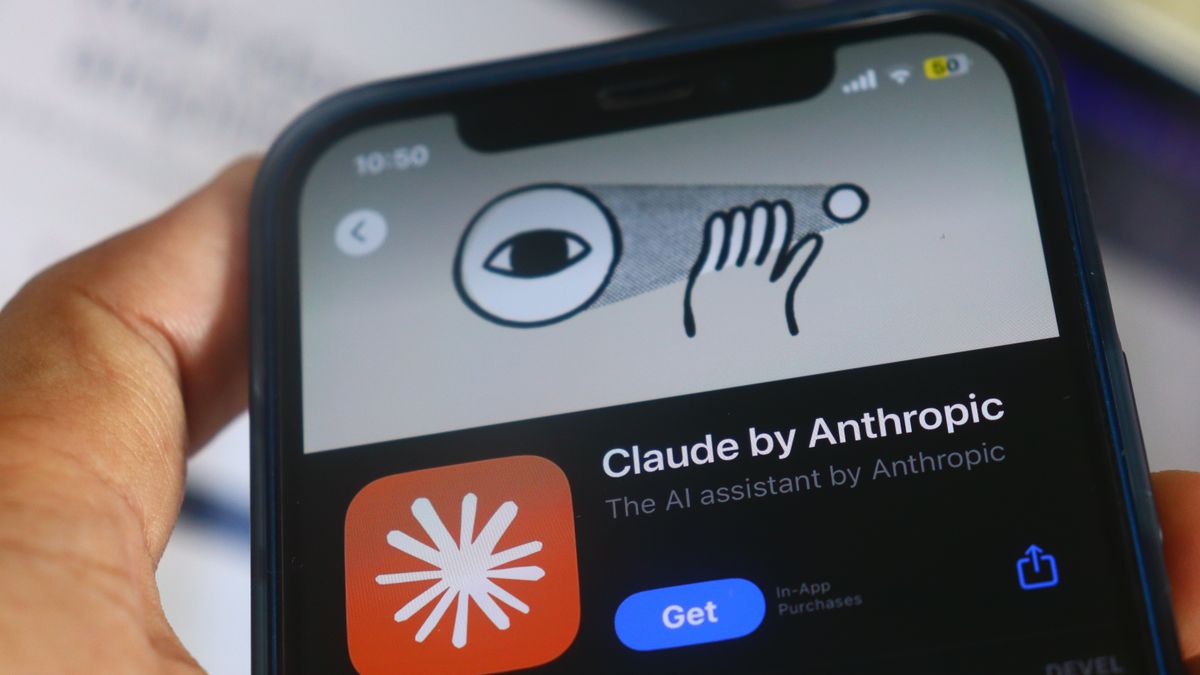
Anthropic has significantly enhanced its generative AI chatbot, Claude, by introducing a new feature that allows users to access and interact with external applications directly within the Claude interface. This development transforms Claude from a conversational AI into a more integrated execution environment, paving the way for advanced enterprise AI workflows. The company anticipates this integration will streamline operations and improve productivity across various business functions.
The new interactive app capability leverages MCP Apps, an extension of the open-source Model Context Protocol (MCP). Originally proposed in November and developed with assistance from OpenAI’s Apps SDK, MCP Apps broadens the scope of MCP. It now facilitates the inclusion of interactive user interface components directly within the chat window, moving beyond mere text or query results. This innovation allows for real-time collaboration with tools and applications as part of an ongoing conversation.
According to Anthropic’s announcement, Claude can now connect to various tools and execute actions on behalf of users. The key differentiator is that these tools now appear within the conversation itself, offering users a transparent view of ongoing processes and fostering real-time collaborative possibilities. Initially, the roster of integrated applications includes prominent names such as Amplitude, Asana, Box, Canva, Clay, Figma, Hex, monday.com, and Slack, with Salesforce’s Agentforce 360 expected to join soon. The company has indicated plans to continuously expand this list to incorporate additional applications, broadening the utility of the feature.
Streamlining Enterprise AI Workflows
Claude’s evolution into an integrated application environment is poised to significantly impact how enterprises deploy agentic AI systems, analysts suggest. The ability to directly access applications within Claude’s interface substantially reduces integration hurdles, simplifying the deployment of Claude as an agentic system across diverse workflows. This reduction in friction is critical for moving AI pilots to production-scale deployments, addressing common challenges faced by businesses.
Akshat Tyagi, an associate practice leader at HFS Research, emphasized that many AI pilot programs struggle to transition to full production due to agents often being unpredictable, difficult to govern, and challenging to integrate into existing operational workflows. Claude’s interactive apps feature directly addresses these pain points. By embedding applications directly into the AI interface, the system becomes more manageable and aligns better with current business processes, making AI implementation more practical and effective.
For enterprise developers, the reduced complexity in integration translates into tangible benefits, including faster iteration cycles and enhanced productivity. Forrester Principal Analyst Charlie Dai noted that this approach offers a more direct path to constructing multi-step, output-producing workflows. Developers can avoid extensive setup and custom programming, allowing them to focus more on innovation rather than intricate system configurations. The streamlined process means projects can advance more quickly from conception to deployment, accelerating the pace of digital transformation within organizations.
The interactive app feature is not only beneficial for developers but also for business teams, who stand to gain significant productivity improvements. With multiple applications integrated within Claude’s interface, teams no longer need to switch between different systems, copy outputs, or manually translate AI responses into actionable tasks. This seamless environment minimizes context switching and operational overhead, allowing teams to work more efficiently and collaboratively. The unified platform encourages a more fluid workflow, where information and actions are cohesive and immediately accessible.
Architectural Shifts and Future Convergence
The introduction of MCP Apps and Anthropic’s overarching strategy for productivity signals a growing architectural divergence within the AI landscape. This is occurring even as vendors pursue the common objective of boosting productivity by embedding AI agents directly into active workflows. The contrasting approaches highlight different philosophies in achieving the same end goal, leading to varied technological pathways.
Chandrika Dutt, a research director at Avasant, pointed out that while Anthropic and OpenAI are developing models where applications run within the AI interface, other major technology vendors like Microsoft and Google are embedding AI directly into their existing productivity suites. Examples include Microsoft 365 Copilot and Google Gemini Workspace, where AI capabilities are integrated into familiar office tools. These two strategies represent distinct pathways toward a similar future state of enhanced productivity.
Dutt further predicted that as enterprise demand for agent-driven execution continues to grow, these separate architectural approaches are likely to converge. She suggested that Microsoft and Google will eventually need to support more interactive, app-level execution models. This convergence would allow for greater flexibility and deeper integration of AI functionalities across various platforms, ultimately providing enterprises with more robust and versatile AI solutions. The market dynamics suggest a future where the best elements of both strategies are combined to meet evolving business needs.
Another crucial aspect of Claude’s new interactive apps is their potential to facilitate easier governance and trust, which are vital for scaling agentic AI systems within an enterprise. In an environment where AI agents are becoming increasingly autonomous, transparency and control are paramount. The design of Claude’s interactive apps addresses these concerns by providing clear visibility into AI operations and decisions, fostering greater confidence in the system.
Dutt highlighted that Claude operates on the same live screen, data, and configuration that the user is viewing. This enables users to precisely observe what changes are being made, where they are applied, and how they affect tasks, files, or design elements in real-time. This level of transparency eliminates the need for cross-checking across different tools, building a stronger foundation of trust and simplifying the oversight of AI-driven actions. The ability to monitor and verify AI activities directly within the interface is a significant advantage for enterprises aiming for responsible AI deployment.
Addressing Security Concerns and Due Diligence
While the integrated nature of Claude’s new interface offers numerous advantages, analysts also cautioned about the potential for exponentially increased security risks. This concern becomes particularly pertinent as more applications are added to the platform, expanding the attack surface. The unified environment, while convenient, centralizes potential vulnerabilities that could be exploited if not properly secured.
Abhishek Sengupta, a practice director at Everest Group, emphasized that running user interfaces of these interactive applications involves executing code that enterprises did not develop themselves. This introduces a greater burden of due diligence for organizations before connecting to an interactive application. Enterprises must thoroughly vet each integrated application to ensure it adheres to their security standards and does not introduce new vulnerabilities into their systems. This rigorous review process is essential for maintaining a robust security posture in a highly integrated environment.
Recognizing these security challenges, MCP Apps incorporates several built-in security features designed to mitigate risks. These include sandboxing UIs, which isolates applications to prevent them from affecting other parts of the system. Additionally, enterprises have the ability to review all templates before rendering them, allowing for pre-emptive identification and rectification of potential security issues. The protocol also offers auditing capabilities for messages exchanged between the application server and the Claude client, providing a detailed log for monitoring and analysis.
The interactive app feature is currently accessible to all paid subscribers of Claude, encompassing Pro, Max, Team, and Enterprise subscribers. Anthropic has also announced plans to extend this capability to Claude Cowork in the near future, further broadening the reach of this innovative integration. This phased rollout ensures that various user segments can benefit from the enhanced functionality, gradually expanding the ecosystem of interactive AI tools. The ongoing development reflects a commitment to continually evolving Claude’s capabilities to meet diverse user needs.