Companies like AWS, Cloudflare, and OpenAI are launching specialized decision models to lower costs and latency in agentic AI workflows.
Anthropic reveals that its Claude AI model now leads over a quarter of its own research and development tasks under human supervision.
Google now offers a pre-trained foundation model for tabular data in BigQuery, enabling enterprise teams to generate predictions from structured data without extensive machine learning training.
Unsloth Desktop provides an open-source solution for developers to manage, train, and run large language models on local workstations across multiple operating systems.
Alibaba launched Qwen3.8-Max, a 2.4-trillion-parameter AI model designed for complex software engineering and enterprise reasoning tasks to rival OpenAI.
A new theoretical framework proposes quantum circuit designs that make large neural networks easier to train while maintaining computational complexity.
Researchers developed a framework to help quantum machine learning models retain learned knowledge while acquiring new tasks, addressing catastrophic forgetting.
Thinking Machines launches Inkling and Tinker to compete with Anthropic by focusing on customizable AI that enhances rather than replaces human cognition.
Explore four specialized memory frameworks designed to extend the context and retention capabilities of large language models and autonomous agents.
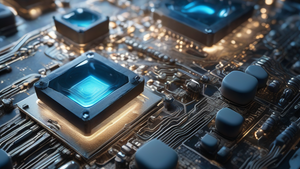
Researchers propose a transistor-based thermodynamic computer architecture that uses 10,000 times less energy than GPUs for specific AI tasks.
MIT researchers develop Masked IRL to help robots clarify vague human commands and focus on essential task details using large language models.
FirstQFM reveals a quantum forecasting system that surpasses classical foundation models in financial time-series accuracy using NVIDIA CUDA-Q acceleration.
Data scientists introduce Arbor, a persistent hypothesis tree that enables AI coding agents to retain experimental insights and boost performance results.
Google introduces DiffusionGemma, an experimental AI model that uses diffusion techniques to generate text blocks simultaneously and improve hardware efficiency.
Discover why treating embedding pipelines as standard data infrastructure is essential for moving AI prototypes into reliable production environments.
Tether releases an edge-first LoRA fine-tuning framework for Bitnet LLMs to enable advanced AI operations on consumer-grade mobile and desktop hardware.
Mojo 1.0 emerges as a high-performance systems language combining Python syntax with Rust-like memory safety for machine learning and systems engineering.
Enterprise IT leaders are increasingly adopting open AI models for greater customization, cost control, and enhanced security compared to proprietary solutions.
Cut artificial intelligence expenses by implementing architectural changes to neural networks instead of relying solely on hardware adjustments.
Discover how small language models offer specialized performance, lower costs, and enhanced data privacy for modern enterprise AI architectures.
Anthropic recently faced quality regressions in Claude Code, highlighting the necessity for strict evaluation protocols in AI development and production.
A new open-source collection of 30,000 Olympiad-level math problems from 47 countries offers a rigorous benchmark for AI and a training tool for students.
Discover why world models are surpassing large language models by integrating spatial awareness and physical reasoning to achieve true artificial intelligence.
Discover critical network and storage strategies for AI, focusing on tail latency, traffic shapes, and data path optimization to ensure reliable, scalable AI performance.
Google's new TurboQuant method improves AI model efficiency by compressing the key-value cache in LLM inference and enhancing vector search operations.
Explore practical strategies to significantly reduce the cost and carbon footprint of AI model training without relying solely on new hardware.
Artificial intelligence workloads necessitate a fundamental reevaluation of the traditional cloud architecture, integrating compute closer to data to boost efficiency and reduce costs.
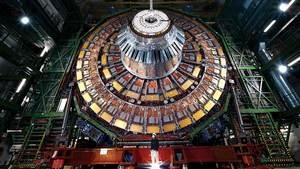
Artificial intelligence is revolutionizing particle physics, actively scanning vast datasets from accelerators like the Large Hadron Collider to uncover anomalies and guide researchers toward groundbreaking theories beyond the Standard Model.
A novel multi-token prediction technique significantly accelerates large language model inference, addressing critical bottlenecks in enterprise AI systems.
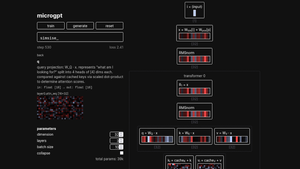
Explore the inner workings of artificial intelligence with MicroGPT, a simplified model that visualizes internal computations directly in your browser.
Google introduces Gemini 3.1 Pro, an advanced AI model designed for complex problem-solving and enhanced core reasoning across various applications.
Proton delivers end-to-end encrypted email, password manager, VPN, and cloud storage under Swiss privacy laws.
High-speed 4-bay USB 3.2 Gen2 enclosure supports hot-swappable HDDs and SSDs, tool-free installation, and up to 10Gbps data transfer with TERRAMASTER D4-320.
UGREEN NASync DXP2800 2-Bay NAS with Intel N100 CPU, 8GB DDR5 RAM, 2.5GbE, M.2 NVMe slots, 4K HDMI, secure private cloud, and AI photo management.
Omada DS108G-M2 8-port 2.5G unmanaged switch provides silent fanless operation, plug-and-play setup, and fast multi-gigabit connectivity for home networks.