Researchers identify key material and fabrication factors that cause performance variance in superconducting qubits to improve quantum computer reliability.
IBM scales its research partnerships with IIT Bombay and IISc to advance sovereign AI, agentic workflows, and quantum-classical computing integration.
Xanadu and Bluefors partnered to develop advanced cryogenic infrastructure for utility-scale quantum computing, focusing on modular and high-performance solutions for future quantum data centers.
Infleqtion and Riverlane signed a memorandum of understanding to integrate real-time error correction with neutral-atom quantum computing platforms.
Infleqtion announced achieving 30 entangled logical qubits using 80 physical qubits on its Sqale quantum computing platform, marking a significant milestone in neutral-atom quantum computing development.
A recent IEEE study demonstrates a new method for verifying that quantum processor outputs remain recognizable and useful for classical control systems.
A Department of Energy advisory panel proposes a phased approach for a national quantum computing user facility, emphasizing validated scientific utility and technical maturity before construction.
Protect autonomous AI agent identities from future quantum computing threats by implementing post-quantum signatures and crypto-agile infrastructure today.
IonQ and Oak Ridge National Laboratory develop a generative AI model that replaces manual tuning loops in quantum optimization circuits to boost speed.
IBM researchers demonstrate a 63-fold reduction in sampling overhead by combining quantum error detection with statistical mitigation techniques.
Phasecraft and NVIDIA achieve a 15x speed increase in quantum simulations to accelerate drug discovery and molecular modeling research.
IBM secures a quantum hub in Switzerland and launches a lunar AI model with NASA to strengthen its position in defense and space sectors.
Altera and Riverlane partner to integrate quantum error correction with Agilex FPGAs to improve real-time data processing and system scalability.
Xanadu and AMD launch Backline to provide low-latency communication between quantum and classical hardware using the open-source PennyLane platform.
IonQ announces Superion 256, a next-generation quantum platform utilizing semiconductor manufacturing and electronic control for data center scalability.
IonQ researchers reveal a 20,000-qubit quantum computer could break Bitcoin's secp256k1 encryption in 26 days, highlighting urgent cybersecurity risks.
New deterministic photon source reaches 500 million usable photons per second to advance quantum networking and computing research.
Expert Brian Gaucher discusses why engineering bottlenecks rather than physics are the primary obstacle to achieving scalable quantum technology.
The new IBM Nighthawk r2 quantum processor achieves speeds of 100,000 circuits per second by using a specialized reset system to eliminate idle time.
QC Ware and IonQ demonstrate a hybrid quantum-classical workflow using Promethium and IonQ Forte to improve molecular binding energy calculations.
IonQ researchers demonstrate that a standard laptop can manage error correction for fault-tolerant quantum machines executing over one million operations.
QuEra Computing uses Anthropic AI agents to create software that restores critical quantum laser systems in seconds, removing the need for on-site specialists.
Princeton University receives $27.9 million from the NSF to lead MARQUIS, a multi-institutional effort to solve manufacturing bottlenecks in quantum computing.
The Trusted Computing Group releases new benchmarks for TPMs to ensure hardware security against emerging quantum computing threats.
Microsoft Research and CASUS integrate the Skala AI model into the CP2K software suite to improve accuracy in large-scale quantum mechanical simulations.
Lionel Martellini discusses why business leaders must understand quantum mechanics to avoid industry hype and prepare for future financial applications.
Silicon spin qubits leverage existing semiconductor manufacturing to bridge the gap between laboratory research and industrial quantum computing scales.
New scientific publications provide theoretical frameworks for evaluating quantum algorithm performance under realistic environmental conditions and scaling requirements.
The Company Lab introduces CO.LAB Q, a 12-month commercialization studio helping quantum startups scale through infrastructure access and industry partnerships.
The University of Guelph and Xanadu signed a partnership to advance quantum computing education and prepare students for high-tech careers through 2028.
Oracle is integrating Quantinuum Helios quantum computers into OCI to provide enterprise customers with managed access to hybrid quantum-AI cloud services.
High-speed 4-bay USB 3.2 Gen2 enclosure supports hot-swappable HDDs and SSDs, tool-free installation, and up to 10Gbps data transfer with TERRAMASTER D4-320.
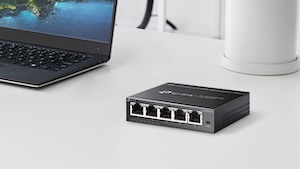
TP-Link TL-SG105S-M2 5-Port 2.5G switch offers auto-negotiation, silent fanless operation, plug-and-play setup, and versatile desktop or wall mounting.
TP-Link Omada EAP773 WiFi 7 tri-band access point with 10G port delivers high-speed, business-grade wireless, seamless roaming, and Omada cloud management.
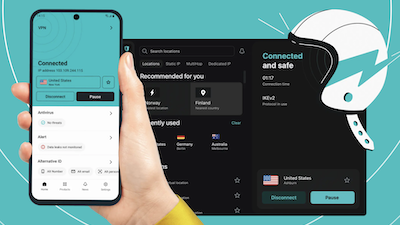
Surfshark VPN delivers AES-256 encryption, unlimited simultaneous connections, CleanWeb ad blocking, split tunneling, and MultiHop for privacy.