Oracle is launching a Business Semantic Layer within its Autonomous AI Lakehouse to provide AI agents with a standardized understanding of enterprise data.
Vanguard warns that while new AI winners may emerge beyond large technology firms, many value funds already hold significant positions in companies like Amazon and Microsoft.
AI startup Anthropic allocates five percent of its equity to a public benefit trust to mitigate social impacts and share future profits with the community.
Technology companies are transforming into infrastructure providers to meet the massive power and networking demands of modern artificial intelligence.
Google Cloud launches Agent Compute Engine to reduce infrastructure costs for AI agents by suspending inactive tasks and preserving execution states.
Vertiv and Nvidia introduce a new strategy to significantly cut the design and deployment time for AI data center power and cooling infrastructure.
Extreme Networks announces a new technology enabling enterprises to run AI applications locally by leveraging existing network equipment's idle processing power.
Model routing automatically selects the most appropriate AI model for a task, balancing cost and performance. This approach optimizes resource use and improves efficiency.
New Cisco Splunk research shows AI agents generate up to five times more telemetry data than standard apps, leading to massive unexpected billing spikes.
Pioneering researcher Richard Socher explains how AI automation in science will surpass chatbots to drive the next era of global breakthroughs.
Anthropic and Harvard researchers utilize Claude AI to design more efficient quantum circuits with fewer qubits and operations for complex calculations.
Review critical trade-offs between speed, cost, and accuracy when moving agentic AI systems from initial prototypes to full production environments.
Researchers at MIT develop artificial neural networks that organize their own learning machinery without developer intervention to mimic brain functions.
Cisco and Nvidia introduce an Ultra-Dense Small Form Factor Pluggable (USFP) optical system, designed to facilitate the rapid construction of high-capacity Ethernet AI fabrics.
Control engineers can improve humanoid robot agility by decoupling high-level motion planning from low-level tracking to maintain professional athletic styles.
Discover how AI coding agents are transforming software engineering by automating complex tasks like debugging, testing, and system iteration.
Oracle explores trucking natural gas to power its massive New Mexico AI campus as pipeline delays threaten project timelines and investor confidence.
Experts at TechCrunch Disrupt analyze how autonomous coding agents and generative AI tools are transforming software engineering and development workflows.
Modern data teams are shifting from reactive monitoring to AI-driven proactive prevention to protect revenue and ensure data integrity.
AI tools increase code output but create bottlenecks in testing and deployment that require teams to redesign their entire delivery pipelines.
Explore the evolution of network automation, from deterministic tasks to advanced AI-driven probabilistic reasoning, enhancing network resilience and efficiency.
Tech companies are launching AI data centers into space to exploit constant solar energy and alleviate the growing strain on terrestrial power grids.
IBM scales its research partnerships with IIT Bombay and IISc to advance sovereign AI, agentic workflows, and quantum-classical computing integration.
Major tech firms support Apache Ossie to establish a common open specification for sharing semantic data models across analytics and AI platforms.
AI-native systems require observability beyond traditional metrics like latency and error rates to ensure accuracy, safety, and efficiency in responses.
AI coding tools accelerate development, but engineers must possess heightened discipline and knowledge to manage complex projects effectively.
Nvidia launched the Open Agent Safety Platform to provide hardware-level security and runtime monitoring for autonomous AI agents across enterprise environments.
Organizations must define workflows, establish baselines, and account for all costs to accurately measure generative AI return on investment beyond initial pilots.
Enterprise AI success hinges on effective steering, control, and governance, not just powerful models. Organizations must redefine workflows to align AI agents with business outcomes and mitigate risks.
Microsoft introduced a .NET SDK for AG-UI, an Agent-User Interaction protocol, developed with CopilotKit, enabling C# developers to standardize agent-to-application communication.
The United States is projected to spend over 10 trillion dollars on artificial intelligence infrastructure by 2032.
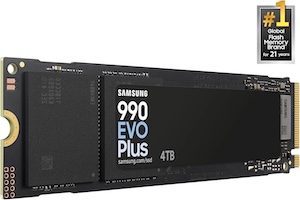
Samsung 990 EVO Plus 4TB M.2 NVMe SSD delivers up to 7,250/6,300 MB/s read/write speeds, exceptional thermal control, and dual PCIe 4.0 x4 / 5.0 x2 compatibility.
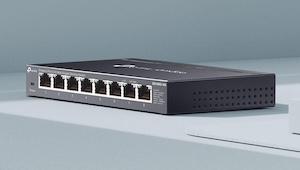
Omada DS108G-M2 8-port 2.5G unmanaged switch provides silent fanless operation, plug-and-play setup, and fast multi-gigabit connectivity for home networks.
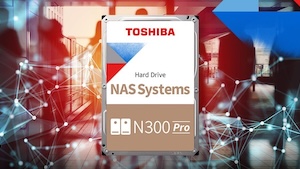
Toshiba N300 PRO 8TB 3.5-inch HDD optimized for business NAS, 24/7 operation, 7200 RPM, 512MB cache, and up to 300TB/year workload.
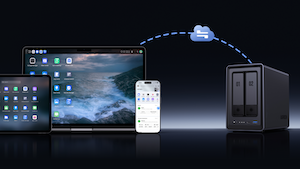
UGREEN NASync DXP2800 2-Bay NAS with Intel N100 CPU, 8GB DDR5 RAM, 2.5GbE, M.2 NVMe slots, 4K HDMI, secure private cloud, and AI photo management.