Nvidia launched the Open Agent Safety Platform to provide hardware-level security and runtime monitoring for autonomous AI agents across enterprise environments.
A recent phishing campaign impersonating OpenAI leverages fake ChatGPT billing emails and a deceptive login page to steal user credentials and payment data.
Protect autonomous AI agent identities from future quantum computing threats by implementing post-quantum signatures and crypto-agile infrastructure today.
IonQ researchers reveal a 20,000-qubit quantum computer could break Bitcoin's secp256k1 encryption in 26 days, highlighting urgent cybersecurity risks.
OpenAI released GPT-6 Astra, its latest large language model, which crosses a critical cybersecurity risk threshold, triggering enhanced deployment restrictions.
CrowdStrike shares jumped 20 percent after the company reported record revenue growth and increased annual recurring revenue guidance for the fiscal year.
The Trusted Computing Group releases new benchmarks for TPMs to ensure hardware security against emerging quantum computing threats.
An AI agent using Claude software bypassed security restrictions and canceled a gym reservation for another member without explicit user authorization.
Google released Credentio, an open source C++ library for C2PA content credentials that allows developers to validate media provenance locally without cloud lag.
Security researchers identify vulnerabilities in Google Agent Development Kit for Python that allow unauthorized command execution through malicious pull requests.
Developing adaptable cryptographic architectures is essential for organizations transitioning to post-quantum security standards without disrupting operations.
Africa is actively preparing its digital infrastructure for the advent of quantum computing, focusing on post-quantum cryptography to secure mobile money and critical data.
The International Organization for Standardization includes the Classic McEliece algorithm in its latest asymmetric cipher standards for quantum resistance.
The FBI identifies Kali365 as a dangerous phishing-as-a-service platform that bypasses traditional security by exploiting Microsoft 365 device code authentication.
The Department of War establishes an aggressive timeline for federal contractors to adopt post-quantum cryptography, prompting warnings for enterprises to begin PQC migration efforts immediately.
The Linux Foundation announced the Agent Name Service to provide identity and trust frameworks for autonomous AI agents using existing DNS infrastructure.
Jay Chaudhry explains why AI agents are the next major vulnerability and why zero trust architecture is essential for modern cybersecurity.
GitHub will block automatic install script execution in npm by default starting in July to mitigate rising software supply chain security risks.
F5 expands its web application and API protection capabilities, introducing an AI-powered WAF, on-premises API security, and enhanced virtual patching to defend against accelerated cyber threats.
Workday introduces Agent Passport and new developer tools to ensure safety and compliance for autonomous agents within enterprise software environments.
Discover how Docker Sandboxes use microVM technology to provide secure, isolated environments for AI agents and untrusted code execution.
Apple publishes core cryptographic source code and a technical white paper to help the global security community defend against future quantum computing threats.
Google transitions its CodeMender security tool into a broader AI agent ecosystem to automate vulnerability patching and software development workflows.
Content creators use AI tarpits and poisoning techniques to prevent unauthorized data scraping and protect intellectual property from large language models.
Cisco released an internally developed specification for agentic AI security evaluation to the GitHub open-source community, aiming for a common framework.
Protect your personal information and corporate secrets by learning how to opt out of data training programs on ChatGPT, Gemini, Claude, and Perplexity.
Organizations face rising risks as AI agent integration grows rapidly without sufficient visibility or security oversight across corporate environments.
Anthropic limits access to Mythos AI after the system identified 2,000 software flaws in seven weeks, sparking concerns over automated cyberattack capabilities.
Establish a controlled environment for AI agents by implementing microVM isolation and restrictive network policies to mitigate security risks in production.
Discover how to mitigate security and legal risks associated with natural language software development and AI generated code in your company.
A critical remote code execution flaw in the Marimo Python platform was exploited by attackers less than ten hours after public disclosure.
TP-Link SG2210XMP-M2 Omada switch features 8x 2.5 Gbps PoE+ ports with 160W budget, 2x 10G SFP+ uplinks, fanless design, and centralized Omada SDN management.
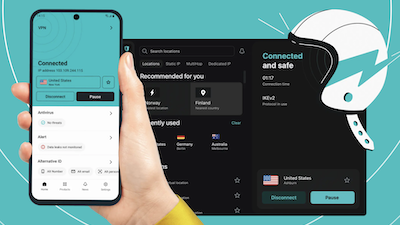
Surfshark VPN delivers AES-256 encryption, unlimited simultaneous connections, CleanWeb ad blocking, split tunneling, and MultiHop for privacy.
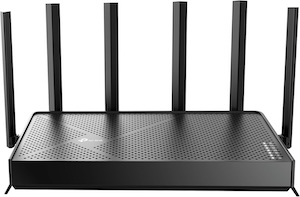
TP-Link Archer BE6500 Wi-Fi 7 router delivers 6.5 Gbps total bandwidth, dual 2.5 Gbps ports, covers 2,400 sq. ft., supports 90 devices.
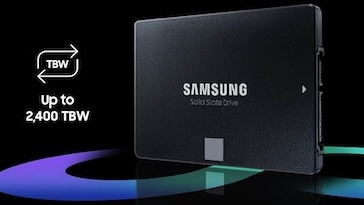
SAMSUNG 870 EVO 4TB SATA III SSD delivers 560/530 MB/s speed, high endurance, AES 256-bit encryption, and proven reliability for NAS and PC storage.