Oracle is launching a Business Semantic Layer within its Autonomous AI Lakehouse to provide AI agents with a standardized understanding of enterprise data.
Discover how to optimize enterprise API connectivity for AI agents using the Model Context Protocol and the efficient code mode execution pattern.
Vanguard warns that while new AI winners may emerge beyond large technology firms, many value funds already hold significant positions in companies like Amazon and Microsoft.
AI startup Anthropic allocates five percent of its equity to a public benefit trust to mitigate social impacts and share future profits with the community.
Technology companies are transforming into infrastructure providers to meet the massive power and networking demands of modern artificial intelligence.
Google Cloud launches Agent Compute Engine to reduce infrastructure costs for AI agents by suspending inactive tasks and preserving execution states.
Vertiv and Nvidia introduce a new strategy to significantly cut the design and deployment time for AI data center power and cooling infrastructure.
Extreme Networks announces a new technology enabling enterprises to run AI applications locally by leveraging existing network equipment's idle processing power.
Model routing automatically selects the most appropriate AI model for a task, balancing cost and performance. This approach optimizes resource use and improves efficiency.
Researchers demonstrate real-time quantum feedback on a 156-qubit IBM Heron processor to manage chaotic behavior and improve fault tolerance.
New Cisco Splunk research shows AI agents generate up to five times more telemetry data than standard apps, leading to massive unexpected billing spikes.
Alice and Bob report successful hardware testing of cat-qubit architecture for the French government PROQCIMA quantum computing initiative.
Quantinuum reports a tenfold decrease in logical error rates on its Helios system, achieving 99.9995% fidelity through an advanced color code architecture.
This comprehensive series outlines a practical framework for transitioning generative AI (GenAI) from experimental pilots to reliable enterprise production systems.
Pioneering researcher Richard Socher explains how AI automation in science will surpass chatbots to drive the next era of global breakthroughs.
Anthropic and Harvard researchers utilize Claude AI to design more efficient quantum circuits with fewer qubits and operations for complex calculations.
Anderon releases its first Superconducting Quantum PDK to standardize device development on 300mm wafer fabrication platforms.
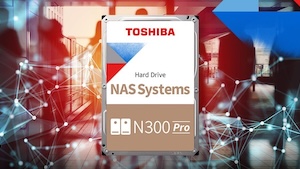
Toshiba N300 PRO 8TB 3.5-inch HDD optimized for business NAS, 24/7 operation, 7200 RPM, 512MB cache, and up to 300TB/year workload.
TP-Link Omada EAP773 WiFi 7 tri-band access point with 10G port delivers high-speed, business-grade wireless, seamless roaming, and Omada cloud management.
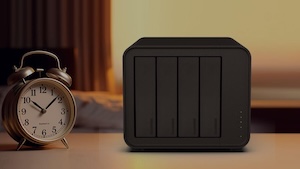
High-speed 4-bay USB 3.2 Gen2 enclosure supports hot-swappable HDDs and SSDs, tool-free installation, and up to 10Gbps data transfer with TERRAMASTER D4-320.
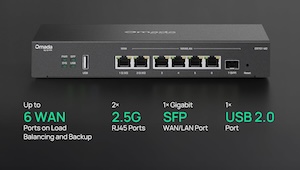
TP-Link ER707-M2 multi-gigabit router delivers dual 2.5G WAN, Omada SDN control, secure VPN, and reliable load balancing for home or small office networks.