AI agents require reliable operational state and external verification of completed actions to prevent errors, especially in real-world applications like refunds or order changes.
The Ultra Ethernet Consortium released version 1.1 of its specification, adding programmable congestion control and specialized support for scale-up AI networks.
Review critical trade-offs between speed, cost, and accuracy when moving agentic AI systems from initial prototypes to full production environments.
Researchers at MIT develop artificial neural networks that organize their own learning machinery without developer intervention to mimic brain functions.
Cisco and Nvidia introduce an Ultra-Dense Small Form Factor Pluggable (USFP) optical system, designed to facilitate the rapid construction of high-capacity Ethernet AI fabrics.
Control engineers can improve humanoid robot agility by decoupling high-level motion planning from low-level tracking to maintain professional athletic styles.
Discover how AI coding agents are transforming software engineering by automating complex tasks like debugging, testing, and system iteration.
Oracle explores trucking natural gas to power its massive New Mexico AI campus as pipeline delays threaten project timelines and investor confidence.
Experts at TechCrunch Disrupt analyze how autonomous coding agents and generative AI tools are transforming software engineering and development workflows.
Companies like AWS, Cloudflare, and OpenAI are launching specialized decision models to lower costs and latency in agentic AI workflows.
Upscale introduces Token Fabric to integrate scale-up and scale-out networking for high-performance AI clusters and enterprise data centers.
A new study reveals Quantinuum's processors handled quantum error correction operations more reliably than competing machines, proposing a simpler benchmark for hardware readiness.
Modern data teams are shifting from reactive monitoring to AI-driven proactive prevention to protect revenue and ensure data integrity.
Arista Networks introduces new Ethernet architectures and partnerships to provide an open alternative to proprietary AI networking interconnects.
AWS integrates Apache Iceberg materialized views into Amazon Redshift to lower compute costs and improve data interoperability across cloud analytics engines.
AI tools increase code output but create bottlenecks in testing and deployment that require teams to redesign their entire delivery pipelines.
Google introduces a unified Cloud Modernize portfolio, integrating existing migration tools with new AI agents and a Modernization Hub to streamline enterprise infrastructure and application transformation efforts.
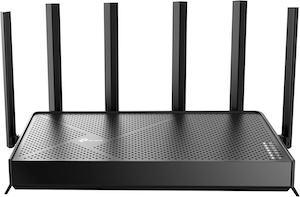
TP-Link Archer BE6500 Wi-Fi 7 router delivers 6.5 Gbps total bandwidth, dual 2.5 Gbps ports, covers 2,400 sq. ft., supports 90 devices.
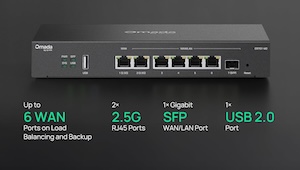
TP-Link ER707-M2 multi-gigabit router delivers dual 2.5G WAN, Omada SDN control, secure VPN, and reliable load balancing for home or small office networks.
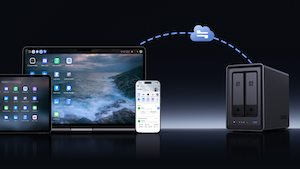
UGREEN NASync DXP2800 2-Bay NAS with Intel N100 CPU, 8GB DDR5 RAM, 2.5GbE, M.2 NVMe slots, 4K HDMI, secure private cloud, and AI photo management.
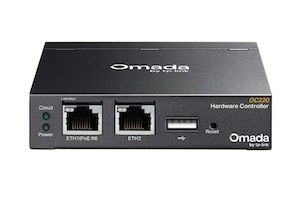
TP-Link Omada OC220 hardware controller enables centralized network management, real-time monitoring, and secure control for Omada routers, switches, and access points.