Explore the evolution of network automation, from deterministic tasks to advanced AI-driven probabilistic reasoning, enhancing network resilience and efficiency.
Researchers identify key material and fabrication factors that cause performance variance in superconducting qubits to improve quantum computer reliability.
Tech companies are launching AI data centers into space to exploit constant solar energy and alleviate the growing strain on terrestrial power grids.
IBM scales its research partnerships with IIT Bombay and IISc to advance sovereign AI, agentic workflows, and quantum-classical computing integration.
Engineers use multipole decomposition and COMSOL simulation to master light transmission, reflection, and absorption in advanced nanophotonic structures.
Major tech firms support Apache Ossie to establish a common open specification for sharing semantic data models across analytics and AI platforms.
Microsoft elevates Rust to a Tier-1 programming language, integrating it with Visual C++ for memory-safe, low-level Windows development.
AI-native systems require observability beyond traditional metrics like latency and error rates to ensure accuracy, safety, and efficiency in responses.
Xanadu and Bluefors partnered to develop advanced cryogenic infrastructure for utility-scale quantum computing, focusing on modular and high-performance solutions for future quantum data centers.
Infleqtion and Riverlane signed a memorandum of understanding to integrate real-time error correction with neutral-atom quantum computing platforms.
AI coding tools accelerate development, but engineers must possess heightened discipline and knowledge to manage complex projects effectively.
Nvidia launched the Open Agent Safety Platform to provide hardware-level security and runtime monitoring for autonomous AI agents across enterprise environments.
Organizations must define workflows, establish baselines, and account for all costs to accurately measure generative AI return on investment beyond initial pilots.
Enterprise AI success hinges on effective steering, control, and governance, not just powerful models. Organizations must redefine workflows to align AI agents with business outcomes and mitigate risks.
Microsoft introduced a .NET SDK for AG-UI, an Agent-User Interaction protocol, developed with CopilotKit, enabling C# developers to standardize agent-to-application communication.
A recent phishing campaign impersonating OpenAI leverages fake ChatGPT billing emails and a deceptive login page to steal user credentials and payment data.
Researchers at NIMS Japan discover that atomic-scale surface steps can guide superconducting vortices with extreme precision in ultrathin materials.
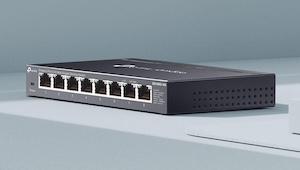
Omada DS108G-M2 8-port 2.5G unmanaged switch provides silent fanless operation, plug-and-play setup, and fast multi-gigabit connectivity for home networks.
TP-Link Omada EAP773 WiFi 7 tri-band access point with 10G port delivers high-speed, business-grade wireless, seamless roaming, and Omada cloud management.
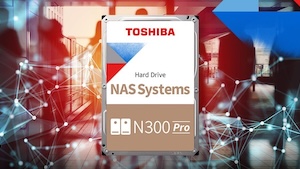
Toshiba N300 PRO 8TB 3.5-inch HDD optimized for business NAS, 24/7 operation, 7200 RPM, 512MB cache, and up to 300TB/year workload.
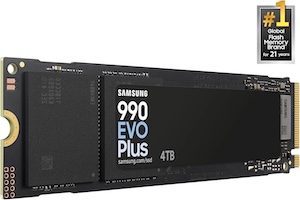
Samsung 990 EVO Plus 4TB M.2 NVMe SSD delivers up to 7,250/6,300 MB/s read/write speeds, exceptional thermal control, and dual PCIe 4.0 x4 / 5.0 x2 compatibility.