Companies like AWS, Cloudflare, and OpenAI are launching specialized decision models to lower costs and latency in agentic AI workflows.
AWS integrates Apache Iceberg materialized views into Amazon Redshift to lower compute costs and improve data interoperability across cloud analytics engines.
Major tech firms support Apache Ossie to establish a common open specification for sharing semantic data models across analytics and AI platforms.
New agentic AI PCs complete generative AI work locally, reducing reliance on expensive cloud-based large language models and offering significant cost savings for enterprises.
OpenAI and Anthropic significantly cut the per-token costs of their newest AI models, indicating a market shift towards price-performance and efficiency for enterprise adoption.
Prepare for inevitable AI price increases by implementing architectural abstraction layers and understanding the hidden costs of model-specific dependencies.
A massive funding round for Nscale highlights how chip manufacturers are using equity stakes to secure long-term hardware demand.
Kubernetes 1.37 introduces workload-aware scheduling and nftables networking to optimize the platform for intensive AI and machine learning tasks.
TrueFoundry introduces TrueForge, an open-source tool for managing AI agents across multiple models to reduce operational expenses by up to 75 percent.
Google released Gemini 3.7 Flash with a fifty percent price reduction to support advanced AI agent workflows and complex software engineering tasks.
Researchers from Microsoft Azure and UT Austin find that multi-step agentic AI workflows struggle on standard GPU-heavy servers and require new hardware.
IBM CEO Arvind Krishna projects quantum computing will generate one trillion dollars in value by the late 2030s while driving revenue by 2028.
Piper Sandler identifies five infrastructure software companies that help enterprises reduce artificial intelligence expenses by optimizing token usage and data efficiency.
Model Context Protocol (MCP) undergoes a significant architectural shift to stateless operation, enhancing scalability and cloud deployment for AI models.
Google updates its infrastructure with custom chips and networking tools to manage the massive scale of autonomous agent workloads.
Benchmark raises Datadog price target to 330 dollars citing strong R&D investment and a leadership position in the growing AI observability market.
Amazon Web Services has substantially increased Amazon Bedrock AgentCore runtime quotas, enabling enterprises to scale AI agents and user interactions efficiently.
Amazon Web Services introduces a managed solution to simplify retrieval-augmented generation and automate complex data pipelines for enterprise AI.
Databricks introduces Lake Transactional and Analytical Processing to unify data systems for real-time AI agent performance and simplified governance.
Industry data shows that cloud outages are increasingly caused by system complexity and process failures rather than simple hardware breakdowns.
Amazon Web Services introduces a new quasi-random routing architecture that significantly reduces power consumption and hardware requirements in data centers.
Google launches Gemini 3.5 Flash as major corporations deplete their annual artificial intelligence budgets months ahead of schedule due to high token costs.
Snowflake plans to acquire Natoma, a US-based startup, to enhance governance, security, and connectivity for AI agents operating across enterprise environments.
Discover how Docker Sandboxes use microVM technology to provide secure, isolated environments for AI agents and untrusted code execution.
Large language models use tokens to process data and determine pricing as corporate demand for artificial intelligence capabilities reaches record levels.
New financial filings reveal xAI will provide massive compute capacity to Anthropic, signaling a shift toward infrastructure as a distinct business asset.
Google introduces Gemini 3.5 Flash to transition generative AI from simple chatbots to automated agents integrated into core business operations.
Anthropic has acquired Stainless to integrate advanced SDK generation and API tools into the Claude platform to assist developers building AI agents.
Amazon Web Services expands CloudWatch Logs Insights query limits to 100,000 rows and adds API pagination to improve debugging for distributed applications.
AWS launches a new tool within Amazon Bedrock to automate prompt refinement and improve model performance across multiple large language models.
Amazon Web Services introduces Graviton powered Redshift RG instances to simplify data lakehouse architectures and minimize enterprise analytics expenses.
TP-Link Omada EAP773 WiFi 7 tri-band access point with 10G port delivers high-speed, business-grade wireless, seamless roaming, and Omada cloud management.
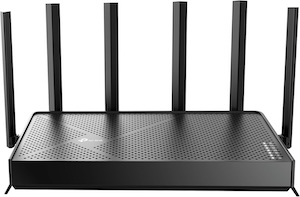
TP-Link Archer BE6500 Wi-Fi 7 router delivers 6.5 Gbps total bandwidth, dual 2.5 Gbps ports, covers 2,400 sq. ft., supports 90 devices.
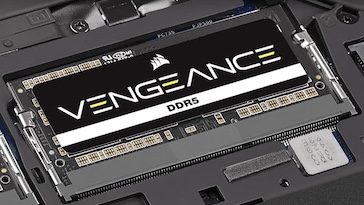
CORSAIR Vengeance 16GB DDR5 SODIMM RAM boosts laptop and small PC performance, delivering high speed, reliability, and easy installation.
Proton delivers end-to-end encrypted email, password manager, VPN, and cloud storage under Swiss privacy laws.