CYBERSECURITY
Combating AI-Powered Ransomware: The Shift to Distributed Security
Ransomware attacks in 2025 have caused business operations to cease for weeks and months at a time, resulting in massive financial losses in organizations around the globe.
- Read time
- 5 min read
- Word count
- 1,051 words
- Date
- Dec 18, 2025
Summarize with AI
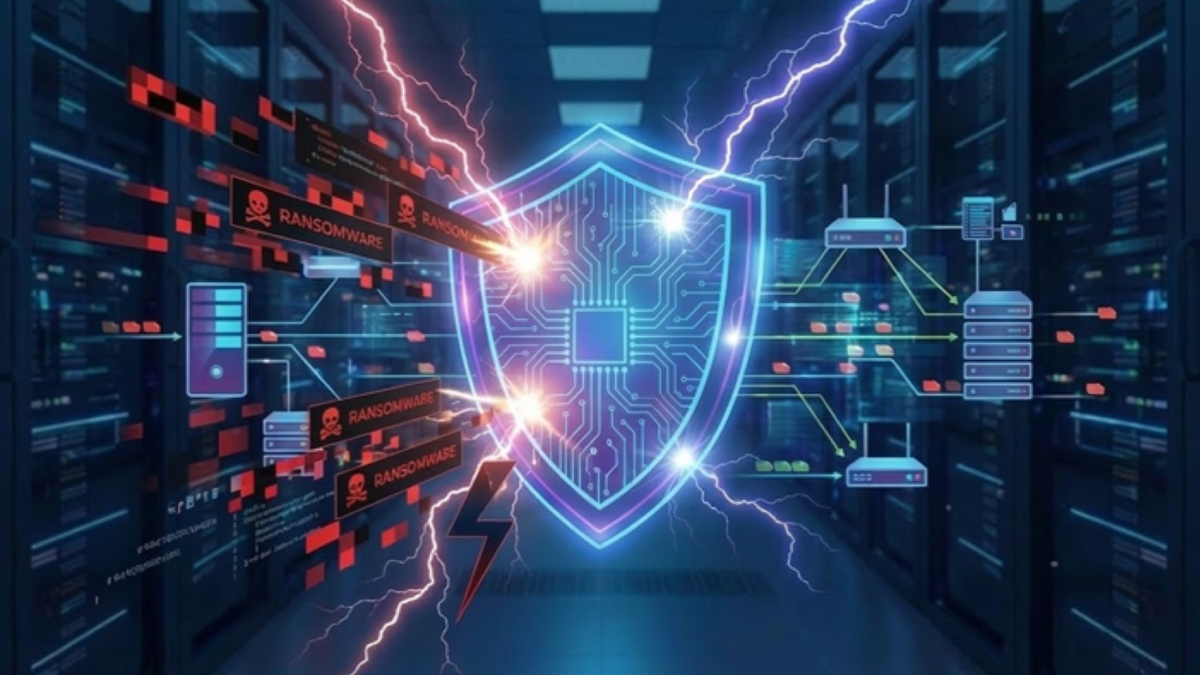
The landscape of cyber threats has dramatically evolved, with AI-powered ransomware attacks causing unprecedented disruption and financial losses across various sectors globally. Traditional perimeter defenses are proving inadequate against these sophisticated threats, necessitating a fundamental shift in enterprise security strategies. The urgency for change is driven by AI's ability to rapidly discover and exploit vulnerabilities across distributed infrastructures. A new approach focusing on distributed security controls, including advanced segmentation and integrated threat detection, is essential to break the ransomware kill chain and protect critical assets in this new era of cyber warfare.
🌟 Non-members read here
The year 2025 has seen an alarming surge in ransomware attacks, crippling business operations for weeks and even months. These incidents have inflicted substantial financial losses on organizations worldwide, impacting critical sectors such as retail, manufacturing, and healthcare. The extensive reach and devastating impact of these breaches transcend the typical scope of security teams, now demanding urgent attention and strategic re-evaluation at the highest levels of corporate leadership.
A significant factor driving this heightened urgency is the rapid advancement of artificial intelligence (AI) in transforming the threat landscape. AI-powered autonomous attacks can now meticulously probe enterprise networks with minimal human intervention. These sophisticated systems are capable of discovering thousands of potential entry points, far exceeding the capabilities of human attackers. This automated reconnaissance allows threat actors to pinpoint vulnerabilities with unprecedented speed and efficiency.
While the initial infiltration methods have evolved, the post-compromise stages often remain consistent. Attackers still engage in lateral movement, diligently searching for high-value assets and ultimately initiating the ransom process. However, the sheer speed and scale enabled by AI emphasize the critical importance of robust security hygiene and proactive defense mechanisms. Enterprises are compelled to adopt a fundamentally different paradigm for their security strategies.
Evolving Threat Landscape and the Need for Distributed Defense
Traditional cybersecurity models, often characterized as a “fortress” approach, relied on strong perimeter defenses to shield internal assets from external threats. This model assumed a clear boundary between trusted internal networks and untrusted external environments. However, the contemporary enterprise landscape is far more complex and dynamic, featuring distributed workloads, containerized applications, and highly elastic infrastructure. These modern deployments render static, perimeter-based defenses largely obsolete, creating new challenges for maintaining network integrity.
Once attackers successfully breach these traditional perimeters, they often find themselves in flat, unsegmented networks. This lack of internal segmentation allows them to move laterally with relative ease, much like an intruder navigating an empty mansion. This free movement enables them to explore the network, escalate privileges, and locate critical data without significant impediments. The absence of internal barriers means a single point of entry can rapidly compromise an entire infrastructure, amplifying the potential for widespread damage and data exfiltration.
The distributed nature of modern IT environments necessitates a corresponding distributed security strategy. Instead of focusing solely on the outer walls, organizations must implement granular security controls at various points within their infrastructure. This approach ensures that even if an initial breach occurs, the threat can be contained and prevented from spreading. The evolving tactics of cyber adversaries, especially those leveraging AI, demand a shift from reactive perimeter defense to proactive, in-depth security measures embedded throughout the network architecture.
Disrupting the Ransomware Kill Chain
Effectively thwarting ransomware requires the implementation of distributed security controls across multiple stages of the attack kill chain. During the initial infiltration phase, robust intrusion prevention capabilities must be deployed wherever potential vulnerabilities may exist. This includes critical areas such as private clouds, virtual desktop environments, and various application layers. A distributed approach is paramount because a single vulnerability, for instance, in Java or Linux, could simultaneously expose dozens of applications across hundreds of servers. This wide-ranging exposure underscores the need for comprehensive and pervasive initial defenses.
The second critical line of defense involves macro- and micro-segmentation. These techniques establish virtual barriers at both the workload and hypervisor levels, thereby preventing unauthorized lateral movement once an initial compromise occurs. Unlike flat networks that allow attackers to roam freely, segmentation contains threats, limiting the scope of potential damage and providing crucial time for security teams to respond. Implementing segmentation, however, demands a disciplined approach. Organizations frequently attempt to jump directly to granular, application-level controls, mistaking the ultimate goal for the first step. A more effective strategy involves a systematic progression, often guided by integrated deployment tooling within firewalls. This progression typically includes assessing the environment, segmenting shared infrastructure services, establishing zone-based protections, and then gradually evolving toward application-level micro-segmentation. This methodical approach ensures a robust and scalable segmentation strategy.
Network Detection and Response (NDR) constitutes the third essential capability in disrupting the ransomware kill chain. As attackers move laterally through a compromised network, they invariably leave behind behavioral signatures. AI-powered integrated threat defense systems can correlate these indicators across the entire environment, identifying malicious activity before data exfiltration or encryption can commence. Crucially, locking down vulnerable protocols, such as Remote Desktop Protocol (RDP), becomes an indispensable measure to mitigate common attack vectors. The combination of strong intrusion prevention, strategic segmentation, and advanced threat detection creates a multi-layered defense designed to stop ransomware in its tracks.
Strategic Integration for Enhanced Security
A significant challenge in current enterprise security operations is the phenomenon of “security tool sprawl.” Organizations often deploy numerous disconnected security solutions, which can lead to deployment delays, policy management complexities, and incomplete coverage across the entire attack chain. The operational reality is that many purchased tools are only partially deployed or utilized across a limited subset of applications, leaving dangerous and exploitable gaps in an organization’s defense posture. This fragmented approach not only complicates security management but also undermines even the most sophisticated strategies, as threat actors can exploit the seams between disparate systems.
The most effective solution lies in integrated software-defined security, strategically deployed at the data center private cloud level, where applications and critical data reside. This architectural approach embeds security directly into the core infrastructure rather than treating it as an add-on. Such unified stacks can provide comprehensive distributed firewall capabilities for both macro- and micro-segmentation, coupled with automated deployment workflows. Furthermore, they integrate advanced threat detection and prevention mechanisms that automatically scale and extend as environments grow and evolve. By embedding security into the virtualization and Kubernetes layers, complete with policy mobility and dynamic workload protection, organizations achieve unparalleled visibility and control.
This integrated approach eliminates the complexities associated with managing disparate IP addresses and significantly reduces deployment delays, ensuring that security measures are pervasive and consistent. Modern ransomware threats, particularly those powered by AI, demand sophisticated and unified defenses. The emphasis must shift away from acquiring more disconnected tools towards developing smarter, integrated architectures designed to break the ransomware kill chain proactively, preventing successful attacks before they can inflict damage. The future of enterprise security relies on this kind of holistic and embedded protection, moving beyond reactive measures to a truly resilient defense posture.