Discover how to transition from a distributed monolith to a composable architecture on AWS, leveraging serverless solutions for scalable and resilient systems.
Discover why relying on a single AI platform leads to limitations and how a specialized multi-tool approach enhances research, writing, and operational efficiency.
Exploring the distinct challenges and innovative solutions for integrating artificial intelligence into essential industrial systems, prioritizing reliability and safety.
AI-assisted low-code and no-code development tools are in high demand, transforming software creation by enabling rapid application development and task automation for users across all skill levels.
The confluence of artificial intelligence, edge computing, and complex security threats is reshaping the landscape of IT infrastructure management.
Review and limit app permissions on your mobile devices to safeguard sensitive data with our step-by-step instructions for iPhone and Android privacy.
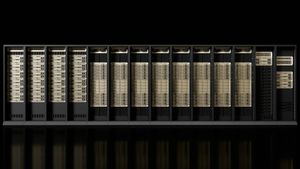
Nvidia's new Rubin architecture, unveiled at CES, revolutionizes AI processing by emphasizing advanced networking chips for unprecedented performance and efficiency.
Explore the innovative magnetohydrodynamic propulsion technology, its historical significance with the Yamato-1, and the challenges limiting its widespread adoption.
Discover how real-time governance, robust data strategies, and proactive guardrails are crucial for maintaining AI system reliability and accuracy in the age of generative AI.
Databricks introduces Instructed Retriever, blending traditional database queries with RAG's similarity search for more precise AI answers in enterprise applications.
AI workloads are revealing critical gaps in traditional DevOps practices, necessitating a shift to holistic platform thinking and robust data observability.
Generative UI, driven by Model Context Protocol APIs, signals a shift to agent-driven architecture where chat interfaces create dynamic UI components.
Amazon Web Services has increased prices for some EC2 Capacity Blocks, potentially impacting enterprises with large-scale machine learning workloads.
Databases must adapt to generative AI and seamlessly integrate with large language models to meet evolving enterprise data needs.
Samsung recently introduced its LPDDR5-based SOCAMM2 memory module, designed to boost performance and efficiency in AI data centers.
Achieving enterprise-wide autonomous AI agent workflows requires a fundamental overhaul of existing architectural blueprints to support asynchronous, event-driven fluidity.
OpenAI details ongoing challenges with prompt injection attacks on AI browsers, emphasizing the need for robust security measures and user vigilance.
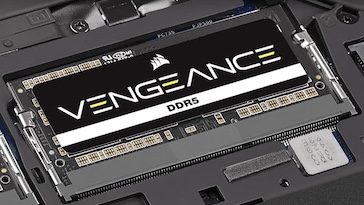
CORSAIR Vengeance 16GB DDR5 SODIMM RAM boosts laptop and small PC performance, delivering high speed, reliability, and easy installation.
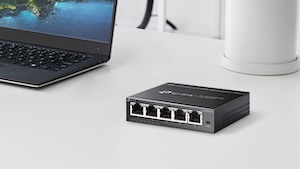
TP-Link TL-SG105S-M2 5-Port 2.5G switch offers auto-negotiation, silent fanless operation, plug-and-play setup, and versatile desktop or wall mounting.
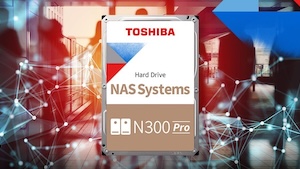
Toshiba N300 PRO 8TB 3.5-inch HDD optimized for business NAS, 24/7 operation, 7200 RPM, 512MB cache, and up to 300TB/year workload.
UGREEN NASync DXP2800 2-Bay NAS with Intel N100 CPU, 8GB DDR5 RAM, 2.5GbE, M.2 NVMe slots, 4K HDMI, secure private cloud, and AI photo management.