3D PRINTING
PHA Filament's Promise as a PLA Alternative in 3D Printing
Explore polyhydroxyalkanoates (PHA) as a promising, truly biodegradable alternative to polylactic acid (PLA) in 3D printing, highlighting its benefits and challenges.
- Read time
- 6 min read
- Word count
- 1,217 words
- Date
- Dec 14, 2025
Summarize with AI
Polylactic acid (PLA) is a common 3D printing filament, but its biodegradability requires industrial composting. A new alternative, polyhydroxyalkanoates (PHA), offers genuine biodegradability without complex processes, along with UV stability and potential medical applications. While promising, PHA currently faces challenges like higher costs and a need for specific post-printing curing. Despite these hurdles, ongoing research and increased production capacity could position PHA as a leading sustainable option in additive manufacturing, addressing environmental concerns associated with traditional filaments.
🌟 Non-members read here
The Evolving Landscape of 3D Printing Filaments
The world of FDM 3D printing has long relied on polylactic acid, or PLA, as a fundamental material. Its widespread adoption is due to its respectable performance and ease of use, making it accessible for many desktop printers. However, the environmental claims surrounding PLA have often been scrutinized. While touted as biodegradable, PLA typically requires specialized industrial composting facilities to break down effectively, casting doubt on its eco-friendly credentials for everyday disposal. This has fueled the search for more genuinely sustainable alternatives within the additive manufacturing community.
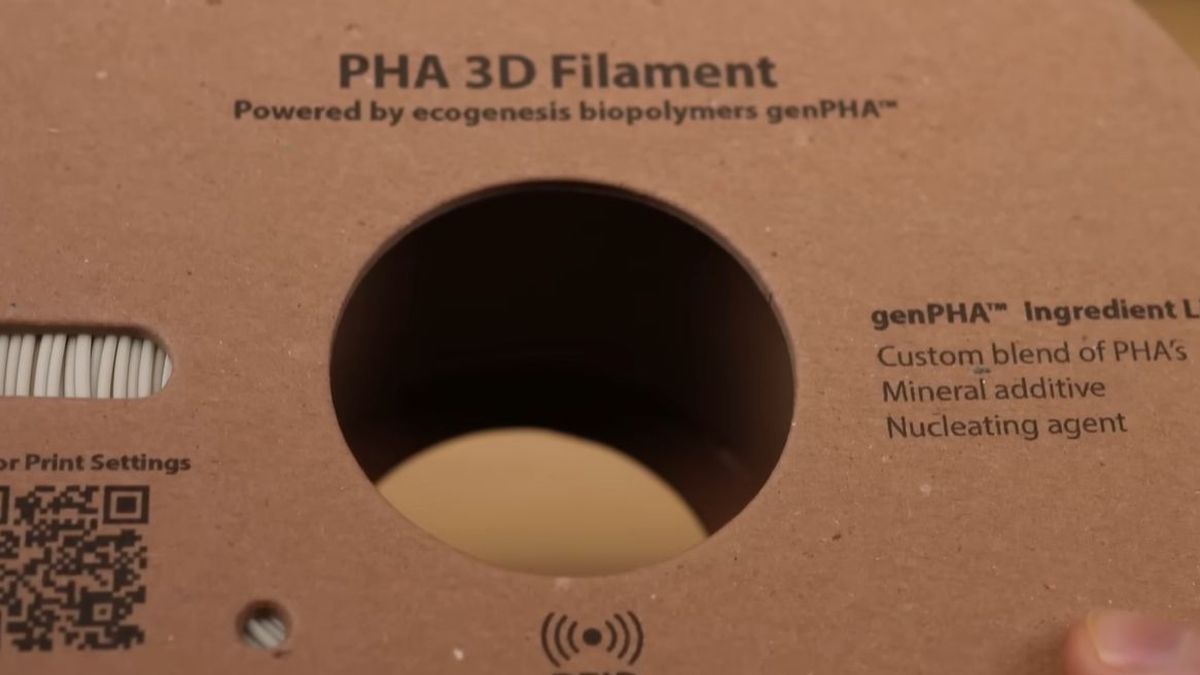
One material that has garnered increasing attention as a potential successor is polyhydroxyalkanoates, or PHA. This bioplastic offers a different pathway to biodegradability, addressing some of the key limitations of PLA. Unlike PLA, PHA can degrade in natural environments without the need for intensive industrial processes, making it a more truly sustainable option for those prioritizing environmental impact. The ongoing exploration of PHA’s properties and printing characteristics represents a significant step towards greener 3D printing practices.
Recent investigations, such as those conducted by JanTec Engineering, aim to thoroughly evaluate PHA filament. These studies focus on its printability and basic resilience to various stresses and conditions. By understanding how PHA performs in real-world 3D printing scenarios, researchers can better assess its viability as a mainstream filament. The goal is to determine if PHA can not only match PLA’s performance but also surpass it in environmental benefits, paving the way for its broader adoption.
The shift towards materials like PHA reflects a growing demand for more environmentally responsible manufacturing. As 3D printing continues to expand into various industries, the impact of filament waste becomes an increasingly important consideration. Developing truly biodegradable options is crucial for mitigating the long-term ecological footprint of this rapidly advancing technology. This pursuit of sustainable materials is a critical frontier in the ongoing evolution of additive manufacturing.
Unpacking the Science and Benefits of PHA
Polyhydroxyalkanoates are a fascinating class of polyesters synthesized naturally by microorganisms, often through bacterial fermentation. This biological origin is key to their unique properties and their distinction from conventional plastics. Their molecular structure allows for natural breakdown without requiring the initial hydrolysis step that PLA needs, enabling them to decompose more readily in diverse environments. This makes PHA a genuinely biodegradable material, a significant advantage over many existing plastics.
Beyond its biodegradability, PHA boasts other valuable characteristics. It exhibits impressive UV-stability, a property that can be crucial for outdoor applications or parts exposed to sunlight, preventing degradation and maintaining material integrity over time. Furthermore, PHA has shown promise in enhancing the properties of other bioplastics; for instance, blends of PLA and PHA often display increased toughness and greater thermal stability. These improved mechanical and thermal properties can expand the range of applications for these materials, making them more versatile.
PHA has already found significant utility in the medical field, particularly in surgical applications. Its biodegradability and biocompatibility make it an ideal material for implants and support structures that can naturally dissolve within the body over time. This reduces the need for secondary surgical procedures to remove temporary devices, offering considerable patient benefits. Such applications highlight PHA’s advanced capabilities and its potential beyond general 3D printing.
The scientific understanding of PHA continues to evolve, with ongoing research exploring various microbial strains and fermentation processes to optimize its production and properties. Adjusting these parameters can lead to different types of PHA with tailored characteristics, suitable for specific industrial needs. This adaptability is one of PHA’s greatest strengths, allowing for custom solutions in a range of advanced applications. The continuous innovation in PHA production methods is crucial for making it a more accessible and cost-effective material.
Navigating the Challenges of PHA Adoption
Despite its compelling advantages, PHA faces several hurdles that currently prevent it from becoming a direct, widespread replacement for PLA. One of the most immediate challenges is its higher cost compared to the readily available and inexpensive PLA. This price disparity is a significant barrier for hobbyists and many industrial users alike, making large-scale adoption difficult without substantial cost reductions. Increased manufacturing capacity and optimized production processes are essential to bringing PHA prices down to a competitive level.
Another practical challenge lies in the current state of 3D printing software. Finding a dedicated PHA preset in most slicer programs is uncommon, necessitating manual adjustments and experimentation to achieve optimal print quality. This lack of standardized settings means users must often develop their own profiles, which can be time-consuming and require a deeper understanding of filament properties. The absence of readily available presets can deter users accustomed to the plug-and-play simplicity of PLA.
Furthermore, mechanical testing of PHA parts directly after printing may not provide a fully representative assessment of their final properties. A key characteristic of PHA is its “curing time” post-printing, during which the material undergoes further crystallization. This means that parts can continue to develop their full mechanical strength and other attributes over a period after they are removed from the printer. Understanding and accounting for this curing process is vital for accurate material evaluation and application.
The curing process can be managed in a couple of ways. Allowing the PHA part to sit for approximately 48 hours enables full crystallization to occur naturally. Alternatively, the process can be expedited by placing the printed object in an oven at a temperature of 70 to 80 degrees Celsius for six to eight hours. This controlled thermal treatment accelerates the crystallization, allowing for quicker assessment and deployment of parts. Incorporating these post-processing steps into workflows is crucial for unlocking PHA’s full potential.
Future Prospects and Considerations for Sustainable 3D Printing
The quest for truly biodegradable materials in additive manufacturing underscores a broader commitment to environmental sustainability within the industry. While PHA presents a compelling case for its ecological benefits, its successful integration as a mainstream filament hinges on overcoming existing economic and technical obstacles. As research and development continue, the landscape for sustainable 3D printing materials is poised for significant transformation.
Increased investment in manufacturing infrastructure dedicated to PHA production is crucial for achieving economies of scale. As production volumes rise, the cost of PHA filament is expected to decrease, making it a more attractive option for a wider range of users. This scaling up of production is not only about affordability but also about ensuring a consistent and reliable supply chain for the material. A stable supply is essential for industrial adoption.
Moreover, the development of standardized printing profiles and widespread inclusion of PHA presets in slicing software will significantly lower the barrier to entry for users. Simplifying the printing process and providing clear guidelines for post-processing will encourage experimentation and adoption among both professional and hobbyist printers. Education and readily available resources will be key to helping the 3D printing community effectively utilize this advanced material.
Ultimately, if the primary goal is to produce genuinely biodegradable parts with a reduced environmental footprint, PHA stands out as an unparalleled option. Its ability to degrade without requiring specialized industrial composting facilities aligns perfectly with the principles of sustainable design and circular economy. As the technology matures and costs become more competitive, PHA is well-positioned to become a cornerstone material in the next generation of eco-conscious 3D printing. This evolution signifies a positive step towards more responsible manufacturing practices.