AIR TAXIS
Floating Vertiports May Propel Air Taxi Revolution
AutoFlight unveils a zero-carbon, solar-powered floating vertiport designed to charge eVTOL aircraft and support diverse applications.
- Read time
- 5 min read
- Word count
- 1,078 words
- Date
- Dec 7, 2025
Summarize with AI
The emergence of solar-powered floating vertiports could represent a significant advancement for the burgeoning air taxi industry. AutoFlight's innovative platform, demonstrated on Dianshan Lake, offers a sustainable and flexible solution for charging electric vertical takeoff and landing (eVTOL) aircraft. By leveraging underutilized water surfaces and clean energy, these mobile hubs address critical infrastructure challenges, potentially accelerating the deployment of air mobility services for passenger transport, cargo delivery, and emergency response. This development highlights a crucial step toward integrating air taxis into daily life and enhancing urban and regional connectivity without extensive land-based construction.
🌟 Non-members read here
Innovating Air Mobility with Floating Vertiports
The future of urban air mobility is increasingly taking shape, with electric vertical takeoff and landing (eVTOL) aircraft poised to revolutionize transportation. A significant hurdle, however, has been the development of suitable infrastructure for landing and charging these innovative vehicles. Traditional vertiports require substantial land and construction, often posing challenges in densely populated areas. A new solution, spearheaded by AutoFlight, proposes a compelling alternative: solar-powered floating vertiports.
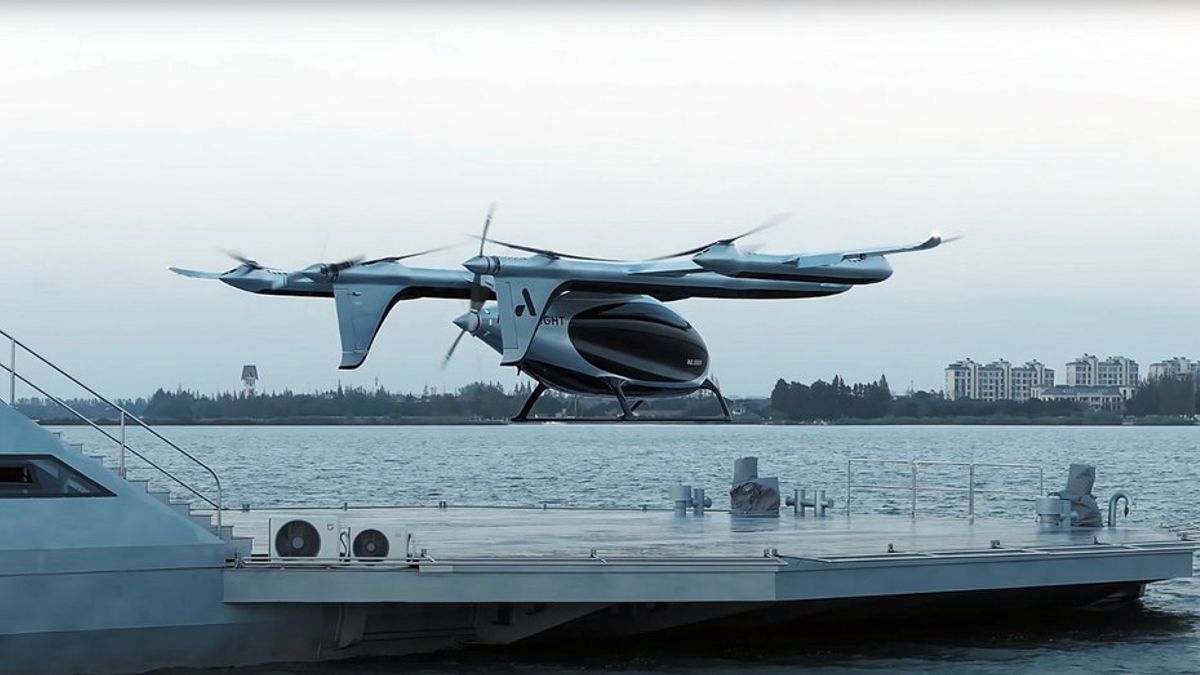
These mobile platforms, designed as self-propelled barges, are lined with solar panels, enabling them to generate their own clean energy. This eliminates the reliance on grid power for charging eVTOLs, marking a crucial step towards truly sustainable air travel. Each platform includes a compact cabin that serves as a departure lounge and technical room, providing essential facilities for operations. The inherent flexibility of these floating hubs allows operators to reposition them wherever demand arises, offering cities unprecedented adaptability in managing air routes and services. This adaptability could dramatically enhance the efficiency of urban logistics and passenger transport.
AutoFlight has developed a system compatible with several of its aircraft, including the six-seat Prosperity passenger craft and specialized cargo and industrial vehicles like the White Shark and CarryAll. All these models can seamlessly land, recharge, and depart from the same floating hub. The ability to deploy these platforms much faster than land-based sites, due to their solar power integration and minimal construction needs, makes them an attractive option for rapidly expanding air mobility networks. This rapid deployment capability is essential for scaling up air taxi services in diverse environments.
A full system demonstration took place on November 22 at Dianshan Lake near Shanghai, where a two-ton-class eVTOL successfully took off from the floating vertiport. The event also featured a formation flight of three aircraft and live airdrop missions, showcasing the system’s potential for emergency support and low-altitude logistics. This comprehensive display underscored the wide-ranging applications of this new platform, extending far beyond simple urban commuting.
Expanding Applications and Benefits
The versatility of AutoFlight’s floating vertiport system extends to numerous real-world applications, offering significant improvements in efficiency and response times across various sectors. For offshore operations, such as wind sites and oil rigs, where waiting hours for essential parts or personnel is common, this system could drastically improve transport efficiency. AutoFlight suggests a potential tenfold increase in efficiency, significantly reducing downtime and operational costs.
In emergency scenarios, the platforms enable rapid aerial response paired with wide-area searches. This capability could cut reaction times by more than half, substantially boosting survival odds in critical situations. Cities situated along rivers and bays could establish swift air routes without impacting existing road infrastructure, alleviating traffic congestion and providing new avenues for connectivity. The ability to deploy these hubs quickly and strategically makes them invaluable for disaster relief missions, forming interconnected networks during peak travel or emergency response efforts.
Moreover, the floating vertiports open new possibilities for the tourism sector. Operators could introduce unique “flight plus water” experiences, combining aerial views with marine adventures for premium travel packages. This innovative approach could attract a new segment of travelers seeking novel and luxurious journeys. The emphasis on sustainable aviation is paramount, and AutoFlight’s partnership with CATL to integrate high-safety batteries into both aircraft and vertiports further reinforces this commitment. The system’s use of clean energy and low-impact infrastructure, by tapping into underutilized water surfaces, minimizes environmental footprint and accelerates the growth of air mobility.
The challenge of establishing adequate landing and charging sites for air taxis has been a significant barrier to their widespread adoption. Floating vertiports provide a practical, clean energy-driven solution that can be deployed quickly. These hubs could facilitate rapid routes between airports and city centers, and even enable quick regional hops, drastically reducing travel times and stress for passengers. The innovative use of water bodies for infrastructure positions these platforms as a key enabler for the air mobility revolution.
The Path to Sustainable Urban Air Mobility
The development of floating vertiports represents a pivotal moment for sustainable urban air mobility. By addressing the critical need for landing and charging infrastructure, these platforms pave the way for a more integrated and efficient transportation ecosystem. The concept leverages existing water bodies, transforming them into vital transit points without requiring extensive land acquisition or disruptive construction. This approach is particularly advantageous for coastal cities, riverside communities, and regions with numerous lakes or interconnected waterways, offering a scalable and environmentally conscious solution.
The integration of advanced battery technology, through partnerships like the one with CATL, ensures that both the aircraft and the vertiports operate with high levels of safety and energy efficiency. This focus on clean energy, coupled with the minimal environmental impact of floating infrastructure, aligns with global efforts to reduce carbon emissions and promote sustainable development. As urban populations continue to grow, the demand for efficient and environmentally friendly transportation alternatives will only intensify. Air taxis, supported by innovations like floating vertiports, offer a compelling answer to these evolving needs.
The flexibility of repositioning these platforms according to demand is a game-changer for urban planning. Cities can adapt their air mobility networks in real-time, optimizing routes and services for special events, peak travel seasons, or emergency situations. This dynamic capability contrasts sharply with the static nature of traditional ground-based infrastructure, providing a level of agility previously unattainable. The ability to deploy these pads rapidly also means that air mobility services can expand sooner, rather than being held back by lengthy construction timelines.
The successful demonstration at Dianshan Lake underscores the technological readiness and practical viability of this approach. It sends a clear signal that air taxis are not merely a futuristic concept but are on the cusp of becoming a tangible reality. As cities explore innovative ways to manage congestion, reduce pollution, and enhance connectivity, embracing models like AutoFlight’s solar water platform could accelerate the transition from concept to daily use for air mobility. The comfort and convenience of boarding an air taxi from a floating platform could soon become a common experience for many.
Ultimately, the widespread adoption of air taxis hinges on the availability of robust, scalable, and sustainable infrastructure. AutoFlight’s solar water platform offers a compelling blueprint for how this infrastructure can be developed and deployed. If urban centers worldwide embrace this innovative model, air mobility has the potential to transform from a niche service into an integral component of the global transportation network much sooner than anticipated, ushering in a new era of efficient and eco-friendly travel.