AI TOOLS
AI Stack Thinking: Beyond the All-in-One Platform Myth
Discover why relying on a single AI platform leads to limitations and how a specialized multi-tool approach enhances research, writing, and operational efficiency.
- Read time
- 7 min read
- Word count
- 1,472 words
- Date
- Jan 12, 2026
Summarize with AI
The initial allure of a single, all-encompassing AI platform often gives way to a realization of its limitations in depth, nuance, and reliability. Shifting from a 'one-platform' mindset to 'stack thinking' involves curating a specialized set of tools, each excelling at distinct tasks. This approach fosters robust and adaptable workflows, mitigating issues like shallow research, generic content, and fragile automation. By carefully selecting tools based on unique capabilities and integrating them through defined structures, users achieve greater clarity, quality, and operational freedom.
🌟 Non-members read here
The Illusion of a Unified AI Platform
Initially, the concept of a singular AI platform managing all aspects of workflow — from research and writing to operations and communications — seemed inherently appealing. The promise of a single login, a streamlined process, and an elegant solution was a powerful draw. However, this integrated approach often leads to significant limitations and ultimately traps users in a system that lacks true depth and adaptability.
The critical breakdown points often manifest in areas requiring nuanced understanding, extensive research, and specialized output. Attempting to force one AI system to perform diverse functions like in-depth analysis, creative content generation, and intricate automation quickly reveals its inherent constraints. Research becomes superficial, writing loses its distinct voice, and operational workflows prove to be surprisingly fragile. This experience highlights a crucial lesson: no single AI tool can adequately address the full spectrum of modern professional demands.
The pivot from a “one-platform thinking” to a “stack thinking” philosophy represents a fundamental shift. Instead of seeking a universal tool, the focus moves to assembling a curated collection of specialized applications. Each tool is chosen for its superior ability to perform a specific task, fostering workflows that are not only more resilient and adaptable but also significantly more effective in diverse real-world scenarios. This strategic approach liberates users from the limitations of generic solutions, paving the way for more sophisticated and reliable AI integration.
Navigating the Single-Platform Pitfall
The initial appeal of a unified AI platform often stems from a desire for efficiency and simplicity. Centralizing all tasks under one digital roof eliminates the hassle of managing multiple accounts and dealing with varying data formats. This perceived convenience, however, can quickly turn into a significant hurdle as the demands on the system grow. What seems like a modern, integrated solution can swiftly reveal its vulnerabilities when pushed beyond its core capabilities.
The first areas to show strain are typically those requiring deep analytical work. Assigning a platform to conduct extensive research — delving into executive backgrounds, identifying thematic trends, and summarizing complex contexts — often yields results that are broad but lack critical detail. When the same system is then tasked with transforming this research into marketing copy, strategic documents, or automated steps, the output becomes generic and uninspired. A recurring pattern emerges: research may cover wide ground but misses subtle nuances, writing feels homogenized and unbranded, and operational workflows, while functional, prove to be brittle under varying conditions.
A significant problem encountered is the disproportionate amount of time spent debugging the platform’s limitations rather than engaging in productive work. This becomes particularly evident when attempting complex, “agentic” workloads, such as an AI assistant managing email threads. The goal of having one AI parse context, draft replies, and convert follow-ups into actionable tasks sounds efficient, but in practice, it often leads to a breakdown in accuracy. Contextual errors, misinterpretations of conversations, loss of nuance in summaries, and failed follow-ups indicate that a single platform struggles to replicate the layered logic and nuanced judgment of human intelligence. This critical realization shifts the focus from trying to make one tool do everything to identifying the most suitable specialized tool for each specific task.
Embracing a Specialized AI Ecosystem
Once the limitations of the single-platform approach become clear, adopting “stack thinking” offers a powerful alternative. This strategy involves deliberately curating a set of specialized AI tools, each designed to excel at particular functions, and enabling them to work together synergistically. This method often uncovers previously unseen gaps and significantly enhances overall operational capability.
The true revelation often occurs with the introduction of a dedicated research engine. This addition immediately exposes deficiencies in previous, broader approaches, leading to profound discoveries. Users might uncover contradictions in an executive’s past statements or unearth niche insights from obscure podcasts, interviews, and specialized writings. Strategic tensions, previously undetected in mainstream profiles, can also become apparent. This isn’t merely an improvement in research; it fundamentally alters the scope of information available and the depth of understanding achievable. What were once attributed to prompt errors are now understood as systemic issues arising from an overextended single tool, solidifying the case for a specialized AI stack.
The Art of Strategic Tool Curation
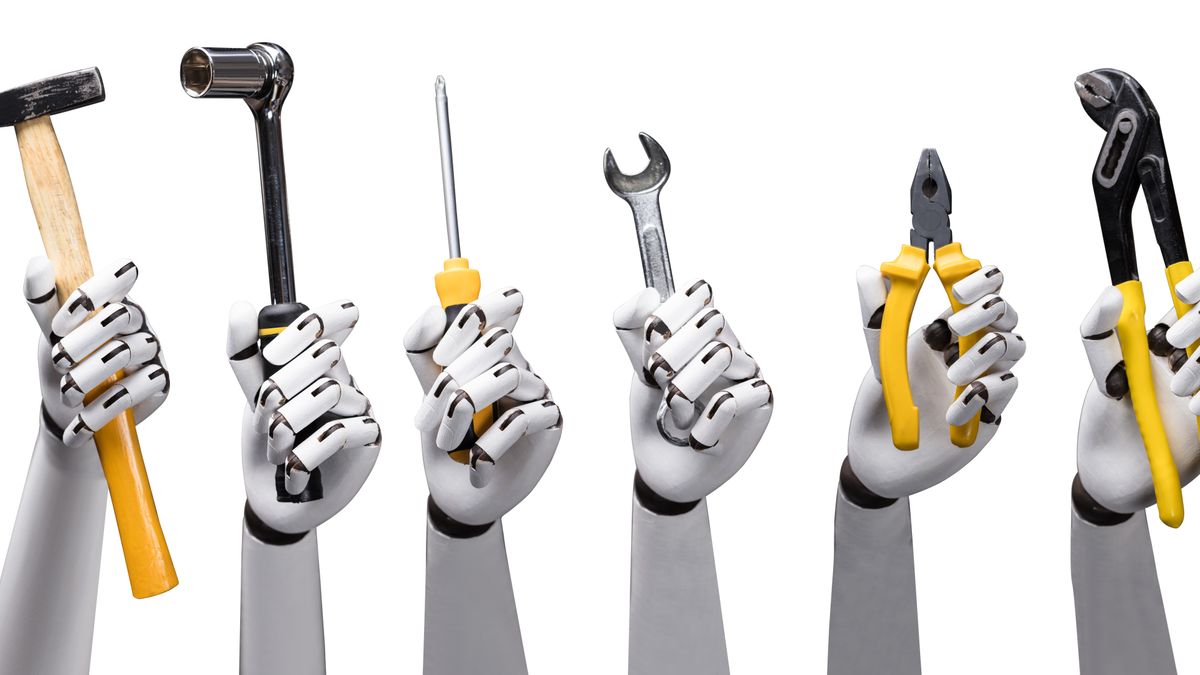
Stack thinking is not about indiscriminately accumulating every new AI tool. Instead, it demands a disciplined approach to curation, treating each tool as a strategic hire within a team. Every tool must specialize in a distinct function and consistently deliver measurable value. This rigorous selection process is crucial for maintaining an efficient and effective AI ecosystem.
Key questions guide this curation process: What unique function does this tool perform better than any other? If its advantage is only marginal, it likely doesn’t warrant inclusion. Does the tool offer compounding time savings, delivering weekly multipliers rather than just one-off benefits? Lastly, can it integrate seamlessly into existing workflows without disrupting established rhythms? A tool requiring significant habit rewiring must offer an extraordinary return on investment. Many tools fall short on the first criterion, masquerading as specialists while being generalists. The goal is to find a “killer” in a specific niche, not another “pretty good at everything” option. If a tool’s unique role cannot be articulated in a single concise sentence, it should not make the cut.
Harmonizing Diverse AI Tools
While a multi-tool stack offers theoretical elegance, its practical implementation can introduce challenges such as context switching, format inconsistencies, and data handover friction. Managing this overhead requires strict discipline and structured orchestration. Without this, the advantages of specialization can be negated by operational inefficiencies.
Effective management of a multi-tool stack relies on defining fixed input and output schemas between different applications. This standardization ensures predictable data flow and minimizes errors. Furthermore, employing a limited number of orchestrator prompts helps translate information seamlessly across systems. Crucially, avoiding freeform, ad-hoc conversations between tools and instead funneling all interactions through a defined framework makes the system predictable, testable, and adaptable. For instance, developing a large website quickly on one platform for initial momentum is effective, but transitioning to a different stack for production-ready architecture becomes necessary. Building with a bench mentality from the outset allows for such transitions without dismantling the entire operation. This approach ensures vendor independence, portability, and reliability, allowing workflows and business operations to run on established terms, rather than being dictated by a single tool’s roadmap.
Strategic Specialization and Evolutionary Growth
To effectively build an AI toolbench, it is imperative to begin by identifying core functions rather than specific tools. This foundational mapping ensures that each tool serves a clear, specialized purpose within the broader workflow. Functions can be categorized into areas such as research and sensing, which focus on breadth, retrieval, and verification; synthesis and reasoning, handling ambiguity and multi-step logic; production, concerning tone, format, and media output; and operations and automation, dealing with routing, triggers, and task persistence.
Common mismatches arise when expectations are misaligned—for example, expecting a research engine to generate marketing copy, or a writing engine to manage complex workflows, or automation tools to replicate human reasoning. Such misapplications lead to a “jack of all trades, master of none” scenario, resulting in universal mediocrity across tasks. Instead, splitting functions across distinct, specialized agents ensures that each task benefits from the specific strengths of its assigned tool, avoiding a diluted performance. This modular approach enhances both efficiency and output quality.
Evolving the AI Stack Thoughtfully
In an rapidly evolving AI landscape, the temptation to chase every new launch or next-generation platform is strong. However, a more strategic approach treats the AI toolbench as a product roadmap: methodical, practical, and diverse. This ensures that architectural integrity is maintained and avoids the inherent fragility of constantly overhauling an entire system.
The approach to integrating new tools should be highly disciplined. First, identify specific points of friction or limitations within the current stack. New tools should then be tested in isolated, controlled “sandbox” workflows to evaluate their performance. Crucially, measure real before-and-after improvements based on concrete leverage, not just industry hype. If a new tool significantly overlaps with an existing one but doesn’t offer a decisive improvement, it should be bypassed. This disciplined, iterative method fosters a resilient and adaptable architecture, free from the brittleness that characterizes reliance on a single, all-encompassing system.
Ultimately, the goal is to build a robust “bench” of specialized AI tools rather than a monolithic “castle.” While the single-platform myth offers a seductive simplicity, this simplicity can mask a profound fragility. Adopting stack thinking means being deliberate about tool assignments, regularly pruning the toolbench, standardizing data handoffs, and prioritizing workflow fit over ephemeral trends. This strategic approach yields not only increased efficiency and superior output but also enhanced clarity, quality, and operational freedom. In a world of continuous technological change, this adaptability and resilience offer a far greater competitive advantage than any individual tool could ever provide.