TOYOTA PRIUS
Toyota Prius Inverter Teardown Reveals Design Changes
A detailed teardown of the fifth-generation Toyota Prius inverter and motor controller uncovers significant design enhancements and modularity.
- Read time
- 3 min read
- Word count
- 780 words
- Date
- Dec 14, 2025
Summarize with AI
Experts have conducted a detailed teardown of the fifth-generation Toyota Prius inverter and motor controller, highlighting key advancements over previous models. Released in 2022, this system underpins current Prius hybrid vehicles. The analysis reveals substantial design changes, including a refined liquid cooling system and a highly modular architecture. This comprehensive look provides valuable insights into the engineering evolution of hybrid vehicle power electronics, showcasing improvements in efficiency and thermal management. The design emphasizes clean integration and a logical component layout, marking a notable progression in automotive hybrid technology.
🌟 Non-members read here
Unveiling the Next Generation of Hybrid Power
The meticulous examination of electric and hybrid vehicle components continues to offer valuable insights into automotive engineering. A recent teardown of the fifth-generation Toyota Prius inverter and motor controller, a system central to the current Prius hybrid lineup since its 2022 release, reveals significant advancements. This detailed analysis provides a compelling comparison to its predecessor, the fourth-generation design from 2015.
The latest iteration of the Prius power electronics demonstrates a substantial overhaul, with approximately half of its design elements either new or updated. These changes encompass critical aspects such as the internal component stack-up and the sophisticated liquid cooling system. Such modifications underscore Toyota’s continuous pursuit of efficiency and performance in its hybrid technology.
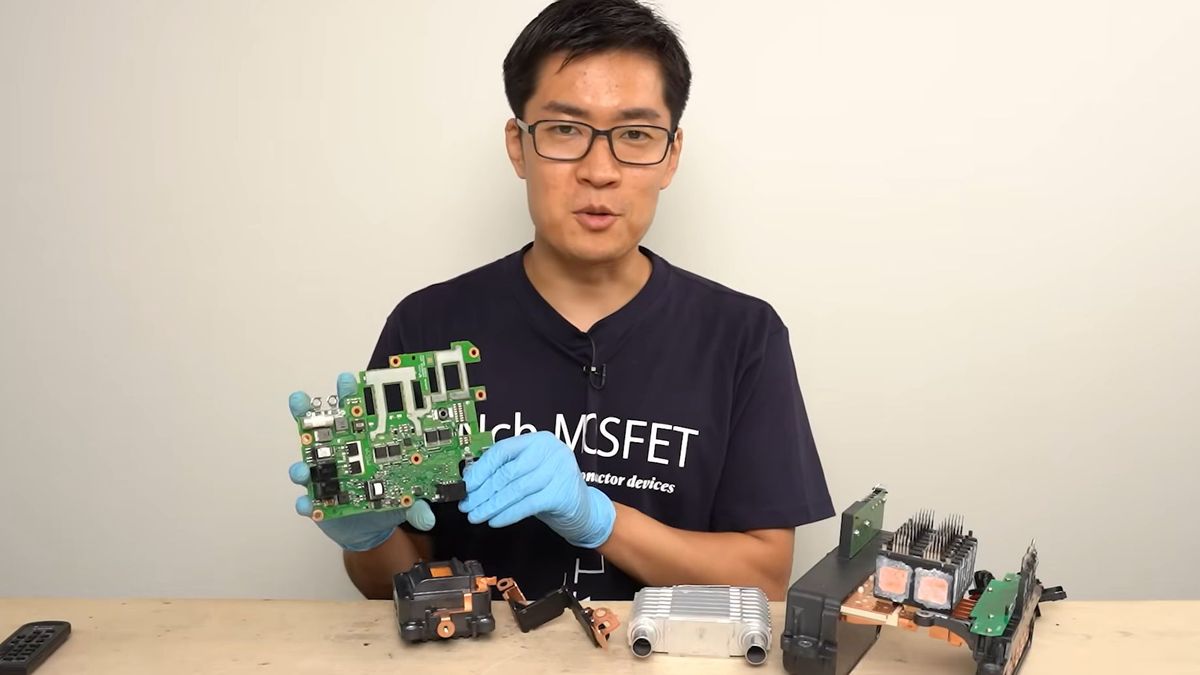
Upon opening the robust aluminum housing, which encapsulates both the dual motor controller and inverters, the internal architecture becomes clear. A dedicated controller card is prominently visible, managing the intricate operations. This card interfaces directly with several power cards, which are tasked with the demanding task of high-power conversion. These power cards are meticulously coupled to a substantial, liquid-cooled aluminum heatsink, crucial for thermal management.
The bottom layer of this sophisticated assembly houses the 12-volt DC inverter board. This component performs its designated function with less stringent cooling requirements compared to the primary power conversion units. Its heat-generating elements are efficiently integrated into the aluminum enclosure, from which the liquid cooling loop effectively dissipates thermal waste. Overall, the design presents as remarkably clean, modular, and, as noted by observers, maintains ample internal space within the housing.
Engineering Evolution in Hybrid Systems
The evolution of hybrid vehicle electronics is a critical area of study, showcasing how manufacturers optimize power delivery and thermal management. The fifth-generation Prius inverter highlights a clear departure from its previous iteration, signaling a push towards greater integration and efficiency. This design philosophy is evident in the careful layout of components and the innovative cooling solutions.
One of the most striking aspects of the new design is the revised stack-up, which refers to the arrangement and layering of the internal circuit boards and power modules. This optimized stacking allows for a more compact footprint while enhancing thermal pathways. Efficient space utilization is paramount in vehicle design, where every cubic centimeter can influence overall performance and packaging.
The liquid cooling system, another key area of innovation, has been re-engineered to handle the thermal loads more effectively. Heat dissipation is a major challenge in high-power electronics, and the ability to efficiently remove heat directly contributes to the longevity and reliability of the components. The serious aluminum heatsink directly coupled to the power cards underscores the importance placed on this aspect.
Furthermore, the modular nature of the design suggests ease of manufacturing and potential for future upgrades or servicing. A modular approach allows engineers to isolate and refine specific subsystems without a complete redesign of the entire unit. This can accelerate development cycles and reduce costs associated with production and maintenance. The separation of the controller card from the power cards is a prime example of this modularity.
Advanced Cooling and Component Integration
The integration of advanced cooling mechanisms is a cornerstone of modern power electronics, particularly in high-performance applications like hybrid vehicles. The fifth-generation Prius inverter showcases sophisticated thermal management strategies that contribute significantly to its overall efficiency and operational lifespan. The multi-layered approach to cooling, addressing different thermal requirements for various components, is a hallmark of intelligent engineering.
The primary power conversion cards, which handle the heaviest electrical loads, are directly linked to a substantial liquid-cooled aluminum heatsink. This direct coupling ensures that heat generated during the power conversion process is rapidly transferred away from sensitive components. Liquid cooling is chosen for its superior thermal conductivity compared to air cooling, enabling more effective heat removal from concentrated sources.
In contrast, the 12-volt DC inverter board, which typically generates less heat, utilizes a simpler yet effective cooling method. Its heat-producing parts are integrated directly into the aluminum enclosure. This enclosure itself forms part of the larger thermal management system, allowing the liquid cooling loop to pick up and dissipate this thermal waste. This tiered cooling strategy ensures that all components operate within optimal temperature ranges without over-engineering less critical areas.
The overall layout within the aluminum housing reflects a thoughtful design process. The clean and modular arrangement not only facilitates efficient heat transfer but also suggests a focus on ease of assembly and potential repairability. The observation that there remains ample room inside the housing further hints at future expansion possibilities or a conservative design approach that prioritizes thermal headroom and component longevity. This integrated approach to component placement and cooling underscores the continuous innovation driving hybrid automotive technology.