ELECTRONICS REPAIR
Solder Flux Quality Impacts Electronics Repair
An investigation into solder flux variations reveals significant performance differences and risks, emphasizing the importance of quality for electronics repair.
- Read time
- 6 min read
- Word count
- 1,225 words
- Date
- Dec 20, 2025
Summarize with AI
An in-depth analysis of solder flux pastes highlights critical performance variations, revealing how counterfeit products can jeopardize delicate electronics repairs. Following a damaging incident with a graphics card, a series of tests on eight different flux pastes from online retailers showcased substantial differences in effectiveness, cleanup, and overall impact on solder joint quality. The findings underscore the necessity of sourcing genuine, high-quality flux and consulting product datasheets to prevent component damage and ensure reliable soldering outcomes in electronics manufacturing and repair.
🌟 Non-members read here
The Unexpected Dangers of Subpar Solder Flux
Solder flux is an indispensable component in electronics manufacturing and repair, serving to clean surfaces and prevent oxidation during the soldering process. However, recent experiences from the electronics community highlight a critical issue: not all flux pastes are created equal, and counterfeit products pose significant risks. A recent incident, where a GeForce2 GTS graphics chip was damaged during a reballing attempt due to ineffective flux, underscores the importance of flux quality.
This incident prompted a thorough investigation into various flux products available on popular online marketplaces. The findings reveal a stark contrast in performance among different brands and formulations, emphasizing that reliance on unverified or counterfeit flux can lead to costly component failures. For professionals and hobbyists alike, understanding these differences is crucial for successful and reliable soldering work.
The role of flux extends beyond merely aiding solder flow; it actively cleans metal surfaces of oxides and other contaminants, creating a pristine environment for solder to form strong, electrical bonds. Without effective flux, solder joints can become brittle, porous, or fail to adhere properly, leading to device malfunction or complete failure. The challenge lies in identifying reliable flux in a market saturated with varying qualities.
A Damaging Encounter and the Drive for Testing
The catalyst for this extensive testing was a frustrating and damaging experience involving a GeForce2 GTS chip. During a reballing operation, a batch of what was believed to be genuine Amtech flux, purchased from a familiar online vendor, performed unexpectedly poorly. This led to the graphics chip overheating and failing, a direct result of the flux’s inability to adequately clean the surface and facilitate proper solder ball formation.
This incident, initially attributed to a potential lapse in technique, quickly shifted focus to the flux itself. The subsequent investigation aimed to understand why a seemingly routine repair went awry and to prevent similar occurrences in the future. The damage to the valuable vintage hardware spurred a methodical approach to evaluating flux performance.
The reballing of Ball Grid Array, or BGA, chips is a delicate process requiring precise heat control and effective flux action. When the flux fails to perform its primary functions, the solder balls may not coalesce correctly, or excessive heat may be applied in an attempt to compensate, leading to thermal damage to the component. This particular incident served as a potent reminder that even experienced technicians can be blindsided by substandard materials.
Extensive Evaluation of Eight Flux Pastes
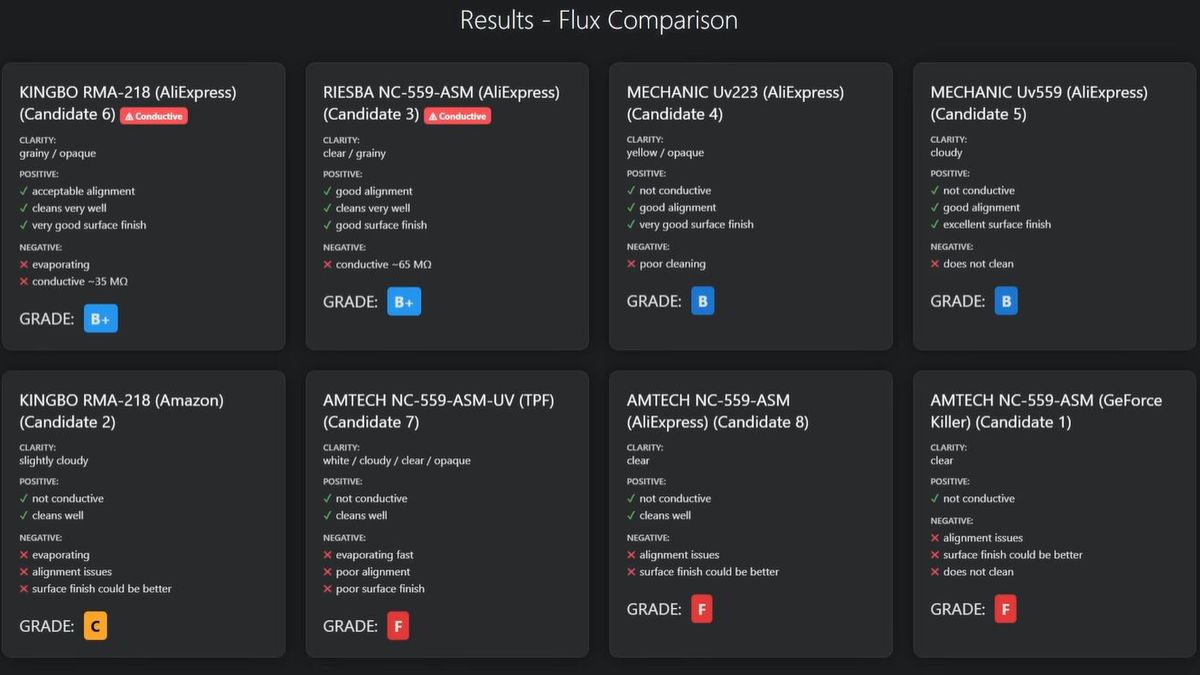
Following the graphics card failure, a comprehensive test was undertaken involving eight different flux pastes. These samples were sourced from both AliExpress and Amazon, encompassing a mix of established brands and less familiar names. The evaluation focused on their performance during a simulated BGA reballing procedure on a test section of a BGA chip. The goal was to observe how each flux facilitated solder ball placement and overall joint quality.
The tests revealed significant differences in the tactile and visual characteristics of the solder joints. Some fluxes allowed solder balls to snap easily into position, resulting in shiny, well-formed connections. In contrast, other flux pastes led to bridging between solder balls or left behind a pockmarked surface, indicating that oxygen had penetrated the flux barrier and hindered proper solder fusion. These visual cues are critical indicators of the flux’s effectiveness.
Furthermore, the post-soldering cleanup process varied considerably among the tested fluxes. “No-clean” fluxes, which are designed to leave minimal, non-corrosive residues, were evaluated for their ease of removal using isopropyl alcohol. Other, more aggressive fluxes, such as the Mechanic brand used in some tests, required specialized PCB cleaners to ensure all corrosive residues were eliminated. The ease of cleanup is an important practical consideration for repair technicians.
Discrepancies in Flux Performance and Cleanup
The comparative analysis of the eight solder flux pastes highlighted substantial variations not only in their soldering performance but also in their post-application residue and cleanup requirements. These differences underscore the complexity of selecting the right flux for specific applications and the potential pitfalls of using unverified products. Understanding these characteristics is vital for both efficient workflow and long-term device reliability.
Some flux formulations exhibited superior wetting action, allowing solder to flow smoothly and create robust connections without excessive heat. These fluxes minimized the risk of cold joints or solder bridges. Conversely, several tested pastes struggled to maintain a clean, oxygen-free environment, leading to poor solder joint formation and increased rework time. The inability of a flux to adequately protect the solder from oxidation can compromise the entire repair.
The residue left by flux after soldering is another critical factor. “No-clean” fluxes are popular because they are designed to leave residues that are electrically inert and non-corrosive, often requiring only a quick wipe with isopropyl alcohol. However, the tests showed that even among “no-clean” varieties, the quality and quantity of residue could differ, impacting the final aesthetic and cleanliness of the board. Some left a stickier or more persistent residue than others.
The Problem with Counterfeit Products
The investigation strongly suggests that ordering clearly counterfeit brand flux paste is a significant gamble. The original incident with the GeForce2 GTS was directly linked to a batch of “Amtech” flux that failed to perform as expected, raising concerns about product authenticity. The market, especially online platforms, is unfortunately rife with counterfeit versions of popular and trusted brands. These fake products often lack the chemical integrity and performance characteristics of genuine formulations.
The allure of lower prices for seemingly identical products can be strong, but the potential costs in damaged components, wasted time, and compromised reliability far outweigh any initial savings. Counterfeit fluxes may contain inferior chemicals, improper concentrations, or even hazardous substances that can corrode components over time. This makes proper sourcing and verification of flux products paramount.
For consumers and professionals, distinguishing genuine products from fakes can be challenging. Visual cues, packaging discrepancies, and unusually low prices can be red flags. However, the most reliable approach is to purchase from reputable distributors or directly from the manufacturer. When in doubt, it is always safer to opt for a less known but verifiable brand than a potentially fake version of a popular one.
The Importance of Product Datasheets
A crucial takeaway from this extensive testing is the absolute necessity of referring to product datasheets. Reputable flux manufacturers provide detailed datasheets that specify the chemical composition, application guidelines, residue characteristics, and safety information for their products. These datasheets are indispensable resources for understanding a flux’s intended use, its compatibility with different solder types, and its cleanup requirements.
The absence of a datasheet should be considered a major red flag for any flux product. A manufacturer’s unwillingness or inability to provide comprehensive technical specifications indicates a lack of transparency and suggests that the product may not meet industry standards or quality controls. Trustworthy suppliers will always make this information readily available to ensure users can make informed decisions and apply the product correctly and safely.
While some brands, like the top-performing Riesba identified in the tests, may not have a strong Western market presence, their performance speaks for itself. Such brands, if accompanied by proper documentation, can be viable alternatives to potentially counterfeit “name brand” products. Ultimately, due diligence in researching and verifying the authenticity and specifications of solder flux is a small investment that can prevent significant headaches and failures in electronics repair and manufacturing.