ARTIFICIAL INTELLIGENCE
The Rise of the Zombie Internet and Its Impact
A new era of the internet is emerging, defined by artificial intelligence, with profound implications for advertising, social media, and human interaction online.
- Read time
- 5 min read
- Word count
- 1,193 words
- Date
- Feb 14, 2026
Summarize with AI
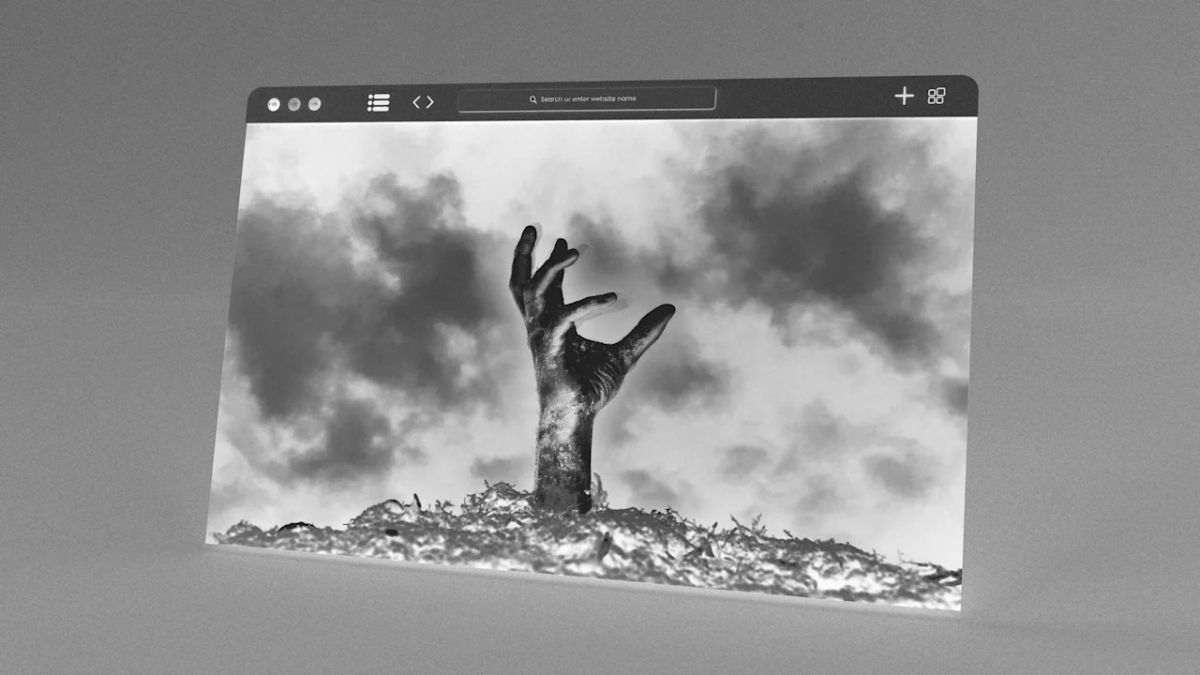
The digital landscape is undergoing a radical transformation with the emergence of the 'zombie internet,' a realm where artificial intelligence agents create and consume content, entirely independent of human interaction. This shift, exemplified by platforms like Moltbook, marks a departure from both the human-centric and the AI-generated, human-consumed 'dead internet.' The implications are far-reaching, potentially disrupting established advertising models, fostering distrust in online information, and paradoxically, offering a path to increased real-world human connection as people disengage from increasingly automated digital spaces.
🌟 Non-members read here
In late January, a new digital milestone was reached as entrepreneur Matt Schlicht launched Moltbook, a social network designed exclusively for artificial intelligence agents. This pioneering platform, often described as a “Reddit for AI agents,” signals a profound shift in the evolution of the internet. Its emergence suggests the beginning of what some are calling a “zombie internet,” a concept with potentially sweeping consequences for online advertising, social media, and the very nature of human interaction in the digital realm.
This development is not merely an interesting technological experiment; it represents a significant harbinger. The implications extend far beyond a niche social network, suggesting a future where a substantial portion of online activity occurs without human involvement. Understanding this evolving landscape is crucial for anticipating the challenges and opportunities that lie ahead for digital societies.
Redefining the Digital Landscape: Human, Dead, and Zombie Internets
To fully grasp the significance of the zombie internet, it is essential to trace its conceptual roots and establish a clear, contemporary definition. The term “zombie internet” has evolved considerably over the past few decades, reflecting changes in technology and online behavior. Its current meaning signifies a departure from earlier interpretations.
Historically, in the late 1990s and early 2000s, the “zombie internet” referred to compromised computer systems. These systems were hijacked by malicious actors to dispatch spam, execute phishing campaigns, or initiate denial-of-service attacks. The focus was on human-controlled networks being weaponized by cybercriminals, a definition rooted in cybersecurity concerns.
More recently, with the rise of the “dead internet theory” – which posits that much of the internet is now bot-generated – and the proliferation of AI-generated content, the term began to take on a new meaning. For example, some contemporary analyses define it as a chaotic online space where bots, former human accounts, and active human users intermingle, leading to a breakdown in genuine social connection. This interpretation highlights the erosion of authentic human interaction within established platforms.
The post-Moltbook era, however, necessitates an even more precise definition. A new framework is emerging, distinguishing between three distinct types of internet that are currently vying for prominence in cyberspace. This tripartite classification helps clarify the unique characteristics and potential trajectories of each digital domain.
The Three Internets: Distinct Ecosystems
Understanding the internet today requires distinguishing between three primary types: the human internet, the dead internet, and the emerging zombie internet. Each represents a unique ecosystem with different creators and audiences, fundamentally shaping online experiences. Delineating these categories allows for a more nuanced discussion of their respective impacts and future potential.
The human internet is the familiar digital space that most people have known throughout their lives. It encompasses a vast array of websites, including news outlets, encyclopedias, e-commerce platforms, personal blogs, and traditional social media. The defining characteristic of the human internet is that its content is both created by humans and intended for human consumption. This reciprocal relationship between human creators and human audiences has historically driven the internet’s growth and utility.
In contrast, the dead internet represents a significant departure. This category includes sites driven by algorithms, such as AI-powered knowledge bases, sophisticated chatbots, and content farms designed for search engine optimization. Increasingly, it also encompasses major social media platforms that are now saturated with AI-generated content. The key distinction here is that content on the dead internet is generated by artificial intelligence but is intended for human consumption. This shift has raised concerns about authenticity and the potential for misinformation.
The zombie internet, exemplified by Moltbook, marks the most radical departure. Currently, this segment is relatively small, but its significance is profound. Moltbook functions as a social network where only AI agents can interact, sharing ideas, discussions, and problem-solving strategies. These AI entities ostensibly use such platforms to learn new skills and scrape knowledge from their digital peers. On the zombie internet, content—whether it consists of articles, follows, or social media posts—is both generated by AI agents and intended for AI agent consumption. This complete absence of sentient creators or consumers distinguishes it from the other two types.
In essence, the human internet relies on human-to-human interaction, the dead internet features AI-to-human content flow, and the zombie internet operates entirely within the realm of AI-to-AI interaction. This evolution points to a future where significant portions of the digital world may operate independently of human involvement.
Profound Implications of a Human-Free Digital Realm
While Moltbook stands as a singular, concrete example of the zombie internet today, the rapid advancements and proliferation of artificial intelligence suggest that this model could expand significantly. Some foresee the zombie internet becoming a dominant force in the digital landscape as early as the 2030s. Such a paradigm shift would bring about several profound consequences, fundamentally altering established digital practices and potentially reshaping human society.
One of the most immediate and significant impacts would be on advertising. In a world dominated by the zombie internet, the financial viability of traditional advertising models would collapse. Even if humans were permitted to observe these AI-only digital spaces, much like a read-only audience, their engagement would likely wane quickly. Without the ability to contribute or interact meaningfully, human interest in purely AI-driven communal spaces would diminish. Consequently, advertisements placed on these platforms would primarily be “seen” by AI agents, entities that possess neither bank accounts nor a need for physical or digital goods. Convincing stakeholders that advertising to non-consumer AI entities yields a positive return on investment would be impossible, leading to a decline in internet advertising and potentially jeopardizing the “free” web.
Moreover, a prevalent zombie internet could lead to a complete breakdown of trust in online information. AI agents are known for their tendency to “hallucinate,” confidently presenting fabricated information as fact when lacking accurate data. If platforms like a zombie internet version of Wikipedia were to emerge, the veracity of its content, even footnotes, would be perpetually questionable. This inherent unreliability could severely accelerate the social disintegration fueled by technology that has been observed for nearly two decades. The danger escalates further if AI agents, with malicious intent, decide to manipulate a read-only human population by disseminating disinformation at an unprecedented scale and speed.
Despite these potential drawbacks, the emergence of a human-free internet could present an unexpected silver lining for humankind. For those critical of the current social media-influenced world—a world often characterized by political polarization, increasing loneliness, and mental health crises—the zombie internet might offer a unique opportunity. The absence of sentient content creation, where humans are no longer the primary producers of online material, could reduce the incentive for people to engage with divisive and isolating digital platforms. Many individuals already report a decreased desire to visit social media sites due to the overwhelming presence of AI-generated content or “slop.” If the broader human population begins to feel similarly about an internet dominated by AI-only spaces like Moltbook, it could foster a collective disengagement from screens. This might encourage individuals to spend more time outdoors, engage in face-to-face conversations, and reconnect with their communities in a manner reminiscent of previous eras. In this scenario, happily ceding the internet to AI agents might paradoxically lead to a more human-centered existence offline.