ARTIFICIAL INTELLIGENCE
Bay Area Labs Crucial to US AI Race Against China
Bay Area laboratories are pivotal in the Genesis Mission, a multi-billion dollar federal initiative to accelerate US artificial intelligence advancements to counter China's technological progress.
- Read time
- 6 min read
- Word count
- 1,243 words
- Date
- Dec 7, 2025
Summarize with AI
The Bay Area's prominent national laboratories are set to play a central role in the Genesis Mission, a multi-billion dollar undertaking by the US government. This initiative aims to significantly boost the nation's artificial intelligence capabilities, positioning it ahead in the global technological competition, particularly against China. Scientists at these labs anticipate leveraging AI to generate hypotheses and drive scientific discovery. The mission's success is seen as crucial for addressing complex national challenges, including accelerating drug development and realizing fusion energy. This effort echoes past historical projects where the region's scientific prowess proved essential.
🌟 Non-members read here
Bay Area at the Forefront of US Artificial Intelligence Initiative
Bay Area laboratories are poised to become central pillars in the Genesis Mission, a multi-billion dollar federal undertaking designed to dramatically accelerate the nation’s artificial intelligence (AI) capabilities. This ambitious initiative responds directly to rapid technological advancements observed in China, aiming to secure the United States’ leadership in this critical field. The involvement of institutions such as Lawrence Berkeley National Laboratory, Lawrence Livermore National Laboratory, and the SLAC National Accelerator Lab in Menlo Park underscores the region’s enduring significance in groundbreaking scientific endeavors.
This strategic inclusion aims to solidify the Bay Area’s position at the epicenter of the unfolding AI boom. According to the Department of Energy (DOE), the project is envisioned to “double the productivity and impact of American science and engineering within a decade.” Such a concentrated effort is deemed essential for the U.S. to maintain its competitive edge on the global stage.
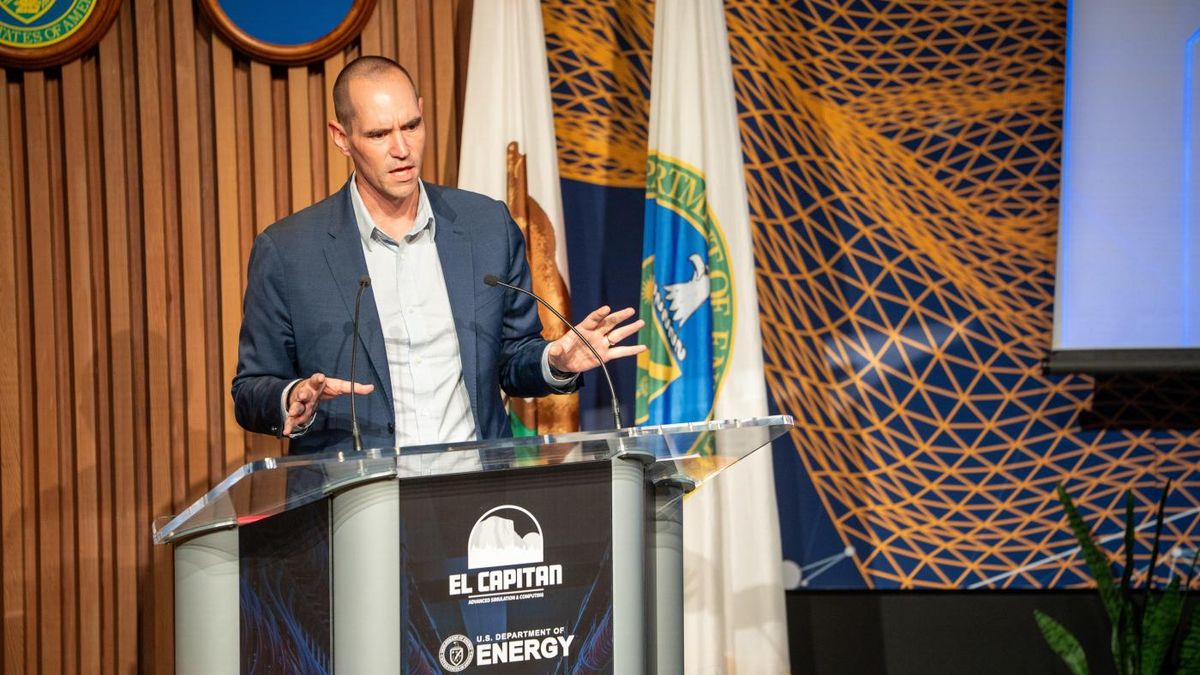
Brian Spears, technical director of the Genesis Mission and a leader of the scientific and engineering foundation at Lawrence Livermore National Laboratory, emphasized the urgency of this endeavor. “China has fired their starter pistol and has organized what you would call the equivalent of their public sector. This is our answer to that,” Spears stated. He added that the mission provides a “central, coherent and focused effort at scale” to harness American innovation.
Researchers at Lawrence Livermore National Laboratory envision AI’s potential to generate novel hypotheses, pushing the boundaries of scientific discovery. As artificial intelligence emerges as the most significant technological competition of the 21st century, the United States seeks to leverage its advancements to tackle pressing and complex national challenges. These objectives include drastically reducing the time required to develop life-saving drugs from decades to mere years, and making fusion energy – a century-long scientific quest to replicate the power of stars on Earth – a practical reality.
U.S. Secretary of Energy Chris Wright highlighted the historical precedent for such national calls to action. “Throughout history, from the Manhattan Project to the Apollo mission, our nation’s brightest minds and industries have answered the call when their nation needed them,” Wright noted in a DOE news release. “Today, the United States is calling on them once again.” This sentiment underscores the perceived strategic importance and national urgency of the Genesis Mission.
Echoes of Past Scientific Races
The current drive to outpace China and other nations in AI development remarkably mirrors earlier technological races where the Bay Area played an indispensable role. In the 1940s, physicists from Lawrence Livermore National Laboratory (LLNL) and Lawrence Berkeley National Laboratory (LBNL) were instrumental in the Manhattan Project. This top-secret initiative aimed to develop nuclear weapons before Adolf Hitler’s Germany could, representing a massive national investment of $2 billion at the time, equivalent to approximately $30 billion in today’s currency.
Today, scientists at the SLAC National Accelerator Lab find themselves at the vanguard of yet another transformative technological competition. Chris Tassone, associate lab director of energy at SLAC, pointed out a fundamental limitation in current scientific progress. He explained that AI is capable of processing vastly more information than any individual could in a lifetime, thereby addressing a bottleneck in how quickly scientific breakthroughs can be conceived and implemented. This capacity is critical in an era of unprecedented data generation.
Tassone elaborated on the necessity of AI tools in modern research. “In my lifetime, we have started generating scientific data at a rate that no human can understand,” he remarked. “If I cannot think at a million times a second, we need these types of tools to make sure we’re doing the best experiments possible when the data rates are that high.” He views AI as the next evolutionary tool for augmenting human scientific inquiry, much like microscopes and observatories revolutionized past eras.
Jonathan Carter, associate lab director of computer sciences at LBNL, stressed the potential dangers of falling behind in AI. He warned that the consequences of not being a leader in fulfilling AI’s potential could be more severe than merely lagging in a rapidly advancing technology. He referenced the swift evolution of AI, noting that ChatGPT, upon its 2020 release, amazed the tech community with its conversational abilities, despite occasional “hallucinations.” Now, OpenAI has introduced tools capable of creating complex multimedia scenes from simple text prompts, illustrating the exponential pace of development.
“Even if you look at the more pessimistic predictions on AI, AI will increase the productivity of scientists. And I think the only debate is, to what extent is it? Is it a factor of 10? Is it a factor of 1,000?” Carter questioned. He concluded with a stark warning: “We could really end up lagging behind in just a few years.” This sentiment highlights the urgent need for robust investment and strategic direction in AI research and development.
Safeguarding AI Development and Global Leadership
Despite growing public concerns about artificial intelligence potentially endangering humanity, Brian Spears offered reassurance by highlighting the role of America’s national laboratories in developing AI. He emphasized that these sophisticated neural networks are housed within “closed loop” systems, meaning they are confined to the labs’ secure digital interfaces. This isolation prevents the AI systems from “breaking containment” and migrating onto the open internet, a critical safety measure.
Spears suggested that if public safety is a primary concern regarding AI, then the involvement of national labs should be viewed positively. “If that’s your concern, then you should be glad this is happening at the national labs, because we have a lot of experience with doing high-consequence, high-risk work,” Spears affirmed. This institutional expertise in managing sensitive and potentially dangerous technologies provides a layer of security and controlled development that may not be available in other sectors.
While China’s public sector research in AI is comparable to that of the United States, American AI companies like OpenAI, Anthropic, and Google are estimated to be several months ahead of their private sector counterparts in China, according to Spears. This competitive edge within the private sector, combined with the extensive AI development taking place in Silicon Valley and the strong “nerd-to-nerd connection” between the region’s national labs and private industry, ensures that the 21st-century technological race will largely unfold in the Bay Area for the foreseeable future. This synergy between public and private innovation is a unique strength of the American approach.
Spears underscored the overarching goal of the Genesis Mission. “The Genesis mission is there to build out the entire U.S. AI ecosystem for the advantage of American citizens—it’s to lift that ecosystem up on the public side, on the private side, and jointly put the U.S. at the front of this global race,” he explained. He further noted the Bay Area’s pivotal role in this broader effort: “The Bay Area is playing a thought leadership role, both on the public side and the private side.” This combined leadership is considered essential for securing the nation’s future in artificial intelligence.
The comprehensive strategy behind the Genesis Mission aims to foster a robust and integrated AI ecosystem. This ecosystem is designed to capitalize on the strengths of both governmental research institutions and the innovative private sector. By leveraging the Bay Area’s unique concentration of talent and resources, the United States intends to solidify its leadership in AI, driving advancements that benefit its citizens and maintain its global technological prominence. The mission represents a coordinated national effort to harness the transformative potential of artificial intelligence while mitigating associated risks.