3D PRINTING
DIY Metal 3D Printing Achieves Breakthroughs
Pioneering enthusiasts are developing accessible selective laser melting (SLM) metal 3D printers, transforming the landscape of DIY manufacturing possibilities.
- Read time
- 5 min read
- Word count
- 1,056 words
- Date
- Jan 3, 2026
Summarize with AI
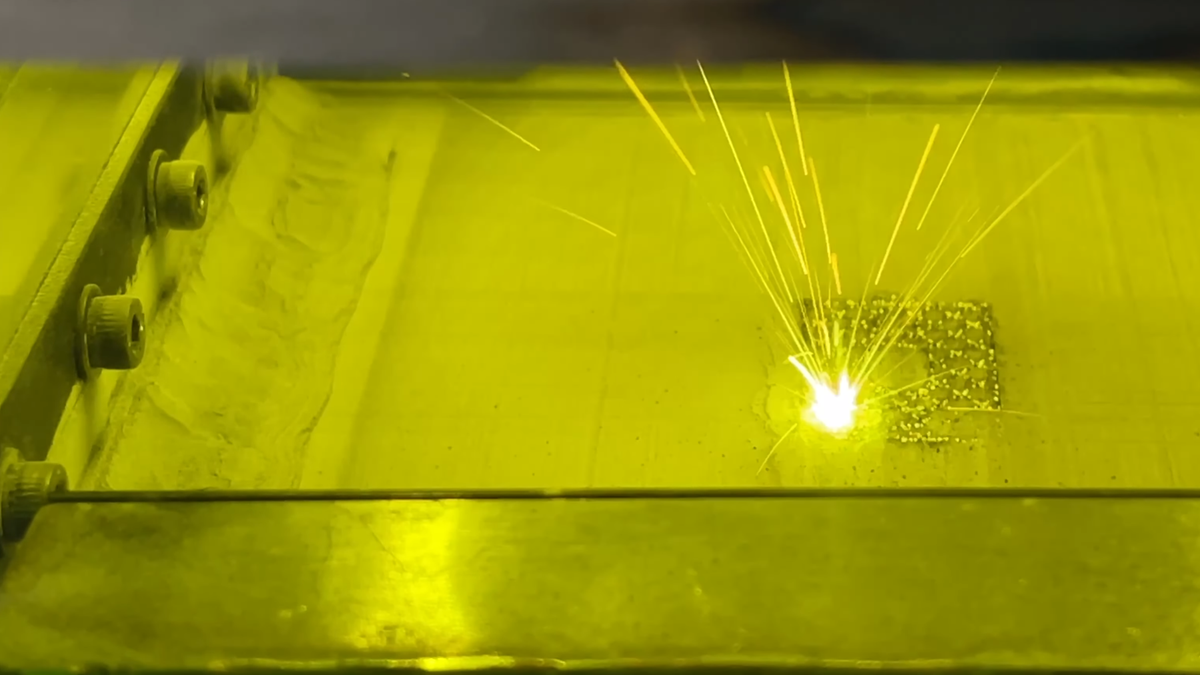
The quest for an accessible metal 3D printer has been a long-standing challenge for hobbyists and makers. Recent advancements, particularly in selective laser melting (SLM) technology, are bringing this goal closer to reality. One notable project involves a custom-built SLM printer utilizing a powerful fiber laser and galvo scan head within an oxygen-purged chamber. This innovative approach addresses key challenges like material adhesion, heat management, and recoater blade durability, paving the way for more widespread metal additive manufacturing among enthusiasts and small-scale operations.
🌟 Non-members read here
Pioneering DIY Metal Printing with Selective Laser Melting
The ambition to create an accessible 3D printer capable of working with metals has long been a pursuit for amateur builders and innovation enthusiasts. While professional-grade metal additive manufacturing systems are common in industrial settings, replicating this technology at an amateur level has remained a significant hurdle, often referred to as a “holy grail” for the DIY community. However, recent breakthroughs by resourceful individuals demonstrate that building such a system is increasingly within reach, albeit with substantial dedication and investment.
One such ambitious project involves the development of a custom selective laser melting (SLM) printer. This sophisticated machine replicates the fundamental principles of industrial metal printing, offering a glimpse into the future of accessible metal fabrication. The construction process for such a device is intricate, involving numerous engineering challenges and meticulous component integration, but the potential rewards in terms of manufacturing capabilities are substantial.
The heart of any SLM system lies in its ability to precisely melt and fuse metal powders layer by layer. This demands powerful and accurate laser technology, coupled with a highly controlled printing environment. Enthusiasts are now leveraging advanced components, often sourced from industrial applications, to assemble these complex machines, pushing the boundaries of what is possible in a home workshop or small-scale lab. The ongoing development in this area highlights a growing trend towards decentralizing advanced manufacturing processes.
Engineering an Accessible Metal Additive Manufacturing System
The core components of a functional selective laser melting (SLM) printer are both high-tech and costly, representing the majority of the investment in such a DIY endeavor. Central to the operation is a powerful fiber laser, typically with several hundred watts of output, paired with a sophisticated galvo scan head. This combination allows for precise aiming and rapid movement of the laser beam across the powder bed, selectively melting the metal particles according to the digital design. The precision and speed of these components are critical for achieving high-quality prints.
To ensure proper metal fusion and prevent oxidation, the print chamber must operate in an inert atmosphere, typically purged with shielding gases like argon. Minimizing the chamber’s volume is a smart design choice to reduce the amount of expensive gas required. Consequently, the scan head is often positioned outside the main chamber, projecting the laser beam through a sealed window, effectively isolating the sensitive optics from the harsh printing environment while maintaining atmospheric control within the build area.
The mechanical movements within the printer are equally crucial for layer-by-layer construction. Repurposed industrial servo motors are frequently employed to control the vertical movement of the build plate and the powder dispenser pistons. These motors provide the necessary accuracy and force to precisely lower the build platform after each layer is fused and raise the powder bed for the next deposition. Another servo motor drives the recoater blade, which sweeps a thin, even layer of fresh metal powder across the build plate surface, preparing it for the subsequent laser pass. This precise coordination of laser, gas, and mechanical systems is fundamental to successful SLM.
Overcoming Critical Challenges in Metal 3D Printing
As with any advanced manufacturing process, particularly in the realm of 3D printing, achieving optimal results with selective laser melting (SLM) involves navigating a series of complex challenges. One of the initial hurdles often encountered is ensuring proper first-layer adhesion. The delicate balance of laser power is critical here; too much power can cause the metal powder to overheat, leading to clumping and uneven melting, while insufficient power can result in incomplete fusion and poor adhesion to the build plate. Finding this “sweet spot” requires extensive calibration and experimentation.
Focusing the laser accurately is another significant factor impacting print quality. A precisely focused laser beam ensures that the energy is concentrated at the desired point, leading to efficient melting and minimal heat spread to surrounding powder. Adjusting the laser’s focal point meticulously can drastically improve the consistency and structural integrity of the printed layers, contributing to a more robust final product. Even with optimal focus, heat management throughout the print process remains an ongoing concern, as excessive heat can lead to warping and internal stresses within the metal part.
The recoater blade, responsible for smoothing new layers of metal powder, also presents unique challenges. Early designs often utilize materials like plastic with silicone edges, which are susceptible to damage when scraping against hot, fused metal surfaces. This wear and tear can compromise the evenness of powder distribution, leading to print failures. Transitioning to a more durable material, such as stainless steel for the recoater blade, significantly enhances performance and consistency, allowing for more reliable and high-quality prints. Despite these advancements, the field remains ripe for further innovation and refinement, as developers continue to push the boundaries of DIY metal additive manufacturing.
The Broader Landscape of DIY Metal Printing Innovations
The emergence of homemade selective laser melting (SLM) machines, while still representing a significant undertaking, signifies a pivotal moment in the history of DIY manufacturing. These projects are not isolated incidents but rather part of a broader, more diverse landscape of experimental metal printing techniques being explored by the maker community. While SLM offers high precision and material density akin to industrial processes, other creative approaches are also gaining traction, demonstrating the ingenuity inherent in amateur engineering.
Beyond laser-based methods, enthusiasts are experimenting with a wide array of alternative technologies to achieve metal fabrication. Electrochemical printers, for instance, leverage electrochemical reactions to deposit metal precisely onto a substrate, offering a different pathway to additive manufacturing without the need for high-power lasers or inert gas environments. These methods often involve immersing a build plate in an electrolyte solution and carefully controlling electrical currents to grow metal structures.
Another fascinating area of development involves printers that focus on precise powder placement, often using binders or localized heating to fuse metal particles without a full melt. These techniques might involve extruding a metal-filled paste which is then debound and sintered, or using targeted energy sources to activate metallic powders in specific patterns. Each method offers its own set of advantages and challenges, from cost and complexity to achievable detail and material properties. The continued exploration of these diverse approaches underscores the vibrant innovation occurring within the DIY metal printing community, pushing the boundaries of what is considered possible outside of large-scale industrial settings.