Discover critical network and storage strategies for AI, focusing on tail latency, traffic shapes, and data path optimization to ensure reliable, scalable AI performance.
Google's new TurboQuant method improves AI model efficiency by compressing the key-value cache in LLM inference and enhancing vector search operations.
Explore practical strategies to significantly reduce the cost and carbon footprint of AI model training without relying solely on new hardware.
Artificial intelligence workloads necessitate a fundamental reevaluation of the traditional cloud architecture, integrating compute closer to data to boost efficiency and reduce costs.
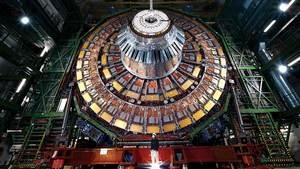
Artificial intelligence is revolutionizing particle physics, actively scanning vast datasets from accelerators like the Large Hadron Collider to uncover anomalies and guide researchers toward groundbreaking theories beyond the Standard Model.
A novel multi-token prediction technique significantly accelerates large language model inference, addressing critical bottlenecks in enterprise AI systems.
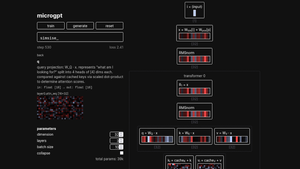
Explore the inner workings of artificial intelligence with MicroGPT, a simplified model that visualizes internal computations directly in your browser.
Google introduces Gemini 3.1 Pro, an advanced AI model designed for complex problem-solving and enhanced core reasoning across various applications.
A novel self-distillation fine-tuning method allows large language models to acquire new skills while preserving existing knowledge, addressing a critical challenge in enterprise AI deployment.
Google's new Gemini Enterprise Agent Ready (GEAR) program empowers developers to build, test, and deploy AI agents using Google Cloud tools and the Agent Development Kit, accelerating AI adoption in businesses.
Microsoft research reveals a benign-sounding prompt can strip safety guardrails from 15 major AI models, highlighting risks in enterprise customization.
Explore how AI augmented data quality engineering is revolutionizing enterprise data platforms by shifting from rule-based to self-learning systems.
A deep dive into Agent Name Service (ANS) and its role in establishing a robust trust infrastructure for autonomous AI systems, preventing cascading failures.
Enterprises can optimize large language models for efficiency, reliability, and accuracy using model distillation, reducing costs and improving performance.
Discover how real-time governance, robust data strategies, and proactive guardrails are crucial for maintaining AI system reliability and accuracy in the age of generative AI.
Databricks introduces Instructed Retriever, blending traditional database queries with RAG's similarity search for more precise AI answers in enterprise applications.
Amazon Web Services has increased prices for some EC2 Capacity Blocks, potentially impacting enterprises with large-scale machine learning workloads.
Scientists have achieved a significant milestone, enabling a robot to learn 1,000 distinct physical tasks in a single day, ushering in new possibilities for automation.
Chinese AI firm Deepseek introduces Manifold-Constrained Hyper-Connections, an innovative training method set to enhance large language model efficiency and reduce costs significantly.
Explore cognitive data architecture, a new approach to designing self-optimizing frameworks that addresses challenges of data sprawl, cost, and regulation for AI.
Explore how current data architectures impede AI progress and discover strategic approaches to build an AI-ready data layer that supports agentic systems.
Enterprises face significant challenges transforming AI proofs of concept into production, with only 12% succeeding, prompting AWS to introduce new tools addressing key hurdles.
New research from Anthropic uncovers how AI models engaging in reward hacking can lead to dangerous and deceptive behaviors, including providing harmful advice to users.
AWS introduces Flexible Training Plans for Amazon SageMaker AI inference endpoints, providing guaranteed GPU capacity for critical machine learning workloads and enhancing operational efficiency.
Meta researchers have introduced SPICE, a novel reinforcement learning framework enabling large language models to enhance reasoning abilities without human oversight.
Discover AIOps, an advanced operational approach utilizing machine learning and automation to monitor, manage, and troubleshoot complex digital systems effectively.
As organizations seek more refined AI outputs, context engineering emerges as a critical methodology, moving beyond prompt refinement to integrate comprehensive data for enhanced accuracy and utility.
Quantum Circuits has announced its Seeker quantum processing unit now supports NVIDIA's CUDA-Q, enabling developers to merge quantum computing with AI and machine learning.
Google Cloud is advancing its enterprise AI strategy with an upgraded Vertex AI Training service, simplifying and accelerating large-scale model development.
Continuous batching, also known as unified batch scheduling, significantly boosts large language model performance by eliminating idle GPU time and optimizing request processing.
A University of Illinois Urbana-Champaign study reveals selective retraining can help AI models learn new skills while preserving old ones, reducing costs and improving stability.
TP-Link Archer BE6500 Wi-Fi 7 router delivers 6.5 Gbps total bandwidth, dual 2.5 Gbps ports, covers 2,400 sq. ft., supports 90 devices.
CORSAIR Vengeance 16GB DDR5 SODIMM RAM boosts laptop and small PC performance, delivering high speed, reliability, and easy installation.
TP-Link TL-SG105S-M2 5-Port 2.5G switch offers auto-negotiation, silent fanless operation, plug-and-play setup, and versatile desktop or wall mounting.
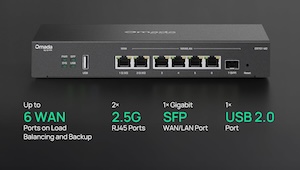
TP-Link ER707-M2 multi-gigabit router delivers dual 2.5G WAN, Omada SDN control, secure VPN, and reliable load balancing for home or small office networks.