Snowflake introduces Horizon Context to provide AI agents with unified business metadata and governance for more reliable enterprise production deployments.
Workday introduces Agent Passport and new developer tools to ensure safety and compliance for autonomous agents within enterprise software environments.
Deploying enterprise GenAI requires a structured pipeline for identity, policy, and retrieval to ensure high quality and cost-efficient performance at scale.
Intel launches the Xeon 6 plus CPU and Crescent Island GPU to address rising energy costs and hardware expenses within modern data center environments.
Discover how the Shadow Walker robot used pneumatic air muscles and a wooden frame to pioneer bipedal movement in the late twentieth century.
Google launches Gemini 3.5 Flash as major corporations deplete their annual artificial intelligence budgets months ahead of schedule due to high token costs.
Bank of America analysts increase price targets for Apple as the company transitions Siri into an orchestration layer for iPhone app automation and commerce.
The Linux Foundation introduces DNS-AID, a standard for AI agents to discover, verify, and communicate using existing DNS infrastructure.
Explore how software engineering's reliance on oral tradition and high developer turnover creates documentation gaps, hindering onboarding and tech debt resolution, and assess AI's role.
Tether releases an edge-first LoRA fine-tuning framework for Bitnet LLMs to enable advanced AI operations on consumer-grade mobile and desktop hardware.
Snowflake plans to acquire Natoma, a US-based startup, to enhance governance, security, and connectivity for AI agents operating across enterprise environments.
Discover how Docker Sandboxes use microVM technology to provide secure, isolated environments for AI agents and untrusted code execution.
Apple publishes core cryptographic source code and a technical white paper to help the global security community defend against future quantum computing threats.
Discover practical strategies for mapping large language model intent to executable code through response schemas, function calling, and context management.
Google has launched Agent Executor, an open source runtime designed to help businesses manage and scale complex AI agent workflows in production environments.
Model Context Protocol provides a standardized way for AI coding agents to access real-time data and external tools for better software development.
Artificial intelligence will expand the software engineering profession by shifting the focus from coding to complex problem solving and orchestration.
UGREEN NASync DXP2800 2-Bay NAS with Intel N100 CPU, 8GB DDR5 RAM, 2.5GbE, M.2 NVMe slots, 4K HDMI, secure private cloud, and AI photo management.
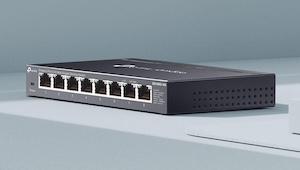
Omada DS108G-M2 8-port 2.5G unmanaged switch provides silent fanless operation, plug-and-play setup, and fast multi-gigabit connectivity for home networks.
Samsung 990 EVO Plus 4TB M.2 NVMe SSD delivers up to 7,250/6,300 MB/s read/write speeds, exceptional thermal control, and dual PCIe 4.0 x4 / 5.0 x2 compatibility.
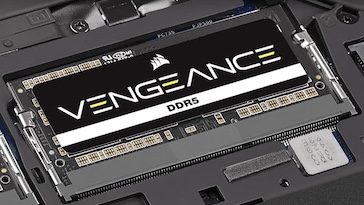
CORSAIR Vengeance 16GB DDR5 SODIMM RAM boosts laptop and small PC performance, delivering high speed, reliability, and easy installation.