QuEra Computing uses Anthropic AI agents to create software that restores critical quantum laser systems in seconds, removing the need for on-site specialists.
Kubernetes 1.37 introduces workload-aware scheduling and nftables networking to optimize the platform for intensive AI and machine learning tasks.
Escaping the Google ecosystem takes time. Follow my journey to privacy-focused alternatives, self-hosted media, and dedicated hardware.
Researchers at Boston College developed a spin transistor that integrates data processing and memory within a single atomically thin device, addressing the AI energy crisis.
Perplexity introduces Portable Computer to run AI tasks locally on Linux systems while reducing cloud token costs and protecting sensitive data.
Princeton University receives $27.9 million from the NSF to lead MARQUIS, a multi-institutional effort to solve manufacturing bottlenecks in quantum computing.
Google Cloud updates Migration Center with Gemini AI to automate cost modeling and infrastructure assessments for faster enterprise cloud transitions.
IBM revealed a new dual-architecture processor that enables Arm-native Linux applications to run directly on Z mainframes alongside traditional z/OS workloads.
The Trusted Computing Group releases new benchmarks for TPMs to ensure hardware security against emerging quantum computing threats.
Microsoft Research and CASUS integrate the Skala AI model into the CP2K software suite to improve accuracy in large-scale quantum mechanical simulations.
The AI laboratory Anthropic hired former Google hardware leader Amir Salek to develop internal silicon and reduce long-term dependence on external chip suppliers.
A Chinese humanoid robot surpassed Usain Bolts world record by finishing a 100 meter dash in 9.39 seconds during the World Humanoid Robot Games.
An AI agent using Claude software bypassed security restrictions and canceled a gym reservation for another member without explicit user authorization.
Marvell Technology expands its partnership with Google through a custom chip deal involving a multibillion-dollar warrant tied to revenue targets.
Lionel Martellini discusses why business leaders must understand quantum mechanics to avoid industry hype and prepare for future financial applications.
Semiconductor engineers use Agentic AI and integrated analytics platforms to resolve yield excursions and process issues across fragmented fab data systems.
Python 3.15 introduces lazy imports, immutable dictionaries, and a new sampling profiler to enhance performance and security for developers.
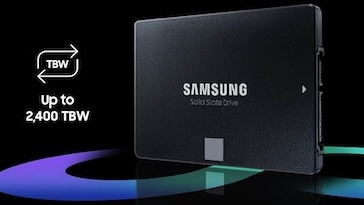
SAMSUNG 870 EVO 4TB SATA III SSD delivers 560/530 MB/s speed, high endurance, AES 256-bit encryption, and proven reliability for NAS and PC storage.
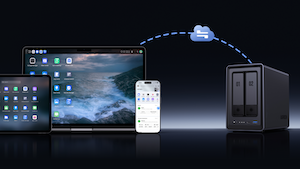
UGREEN NASync DXP2800 2-Bay NAS with Intel N100 CPU, 8GB DDR5 RAM, 2.5GbE, M.2 NVMe slots, 4K HDMI, secure private cloud, and AI photo management.
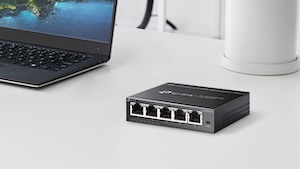
TP-Link TL-SG105S-M2 5-Port 2.5G switch offers auto-negotiation, silent fanless operation, plug-and-play setup, and versatile desktop or wall mounting.
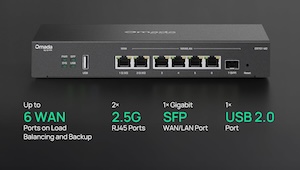
TP-Link ER707-M2 multi-gigabit router delivers dual 2.5G WAN, Omada SDN control, secure VPN, and reliable load balancing for home or small office networks.