A newly discovered Android vulnerability in MediaTek processors allows attackers to bypass lock screens and access sensitive data on affected phones.
Thousands of US cities are deploying AI-powered license plate readers, creating vast surveillance networks and raising significant privacy concerns for citizens.
Japanese researchers developed a Wi-Fi chip capable of operating in high-radiation environments, demonstrating resilience after exposure to 500 kilograys.
Discover how to disable data collection across major AI platforms like ChatGPT, Google, Alexa, and Siri to protect your privacy and personal information.
A New York Times journalist faced consequences for using AI in a book review, sparking debate over AI's role in creative criticism and trust in publishing.
Google introduces new Gemini API tiers, Flex and Priority Inference, giving enterprise developers more control over AI model usage costs and reliability for diverse workloads.
Leading technology executives frequently regret treating artificial intelligence as a standard workload, overlooking its distinct operational characteristics.
Google Research introduces TurboQuant, a compression algorithm poised to drastically cut AI memory demands, impacting memory prices and data center efficiency.
Recent breakthroughs in quantum computing hardware and error correction are dramatically reducing the projected qubit count needed to break modern encryption, prompting urgent calls for enhanced security measures.
Slack is enhancing its AI assistant, Slackbot, transforming it into a sophisticated agent capable of orchestrating complex workflows across various external applications.
Meta researchers developed a structured prompting technique enabling large language models to verify code patches without execution, achieving up to 93% accuracy.
Microsoft enhances its Copilot Researcher agent with multi-model AI capabilities, introducing 'Critique' and 'Council' features to improve research accuracy and depth.
Microsoft introduces new Azure Copilot features to streamline cloud migration and application modernization, leveraging AI to reduce technical debt and optimize infrastructure.
Discover critical network and storage strategies for AI, focusing on tail latency, traffic shapes, and data path optimization to ensure reliable, scalable AI performance.
Enterprises moving beyond initial AI pilots face unique infrastructure challenges, requiring integrated, secure, and high-performance solutions for successful deployment.
A new software system called Surf-A offers direct pilot alerts to prevent runway collisions, enhancing safety at airports by providing crucial seconds for reaction.
Ghost tapping scams leverage small contactless charges to validate stolen card details, signaling broader fraud attempts. Spot unauthorized NFC charges early to prevent financial losses.
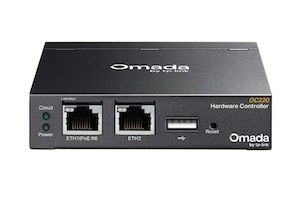
TP-Link Omada OC220 hardware controller enables centralized network management, real-time monitoring, and secure control for Omada routers, switches, and access points.
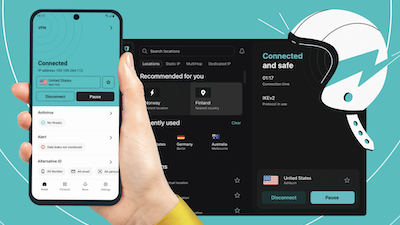
Surfshark VPN delivers AES-256 encryption, unlimited simultaneous connections, CleanWeb ad blocking, split tunneling, and MultiHop for privacy.
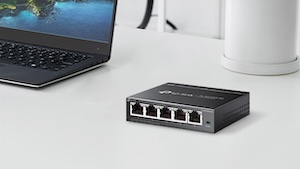
TP-Link TL-SG105S-M2 5-Port 2.5G switch offers auto-negotiation, silent fanless operation, plug-and-play setup, and versatile desktop or wall mounting.
CORSAIR Vengeance 16GB DDR5 SODIMM RAM boosts laptop and small PC performance, delivering high speed, reliability, and easy installation.