Explore why comprehensive AI agent evaluations, focusing on user interaction and trust, are crucial for successful deployment and avoiding project cancellations.
Microsoft Research developed MOSAIC, a MicroLED-based optical interconnect system, projected to halve energy consumption in data centers compared to laser-based cables, addressing critical power bottlenecks.
Nvidia has integrated Intel Xeon 6 CPUs into its DGX Rubin NVL8 systems, leveraging x86 compatibility for advanced agentic AI workloads.
Nvidia's new Vera Rubin platform integrates compute, networking, and data processing into unified rack-scale deployments, marking a significant shift in large-scale AI infrastructure.
Agentic AI is reshaping enterprise application modernization by introducing autonomous capabilities that organize and reconfigure workflows.
Quantum Elements has unveiled a groundbreaking technique, logical dynamical decoupling, that leverages AI-powered digital twin technology to significantly reduce error rates in logical qubits, achieving 95% fidelity.
Threat actors exploit Open VSX extension dependencies to spread GlassWorm malware, targeting developers with seemingly benign tools that later deliver malicious payloads.
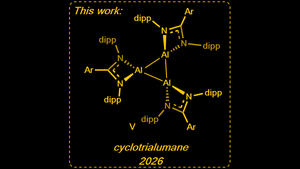
A novel aluminum-based compound, cyclotrialumane, shows promise in replacing expensive platinum-group metals in critical industrial catalytic processes.
A new Android application, Nearby Glasses, can detect nearby smart glasses that may be secretly recording, scanning Bluetooth signals for potential cameras.
A hacker group linked to Iran is accused of targeting Stryker, a major US medical technology company, allegedly wiping devices through Microsoft systems.
Arista Networks introduces a 12.8 Tbps liquid-cooled optical module, XPO, designed to meet the extreme power and performance demands of AI data centers.
IBM has introduced a new reference architecture for quantum-centric supercomputing, aiming to integrate quantum and classical systems to tackle complex scientific challenges.
Enterprises aiming for autonomous AI systems must overcome fragmented data and strategic misalignments to achieve reliable, impactful automation.
Discover the critical hurdles in AI-assisted software development, focusing on the overlooked challenges of deploying code safely and effectively in complex cloud environments.
A new study reveals that shifting to 800V direct current power can significantly reduce costs, energy waste, and infrastructure complexity in high-density AI data centers.
Discover essential data management principles that enhance organizational resilience, focusing on systemic interactions, stress-tested architectures, and decision-capable governance.
TypeScript 6.0, Microsoft's strongly typed JavaScript variant, has reached its release candidate stage, introducing refined type checking for generic calls and deprecating certain syntaxes.
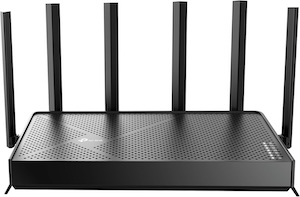
TP-Link Archer BE6500 Wi-Fi 7 router delivers 6.5 Gbps total bandwidth, dual 2.5 Gbps ports, covers 2,400 sq. ft., supports 90 devices.
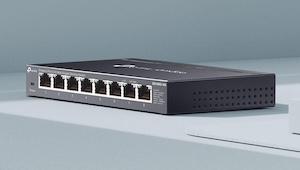
Omada DS108G-M2 8-port 2.5G unmanaged switch provides silent fanless operation, plug-and-play setup, and fast multi-gigabit connectivity for home networks.
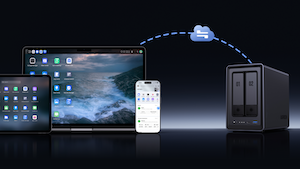
UGREEN NASync DXP2800 2-Bay NAS with Intel N100 CPU, 8GB DDR5 RAM, 2.5GbE, M.2 NVMe slots, 4K HDMI, secure private cloud, and AI photo management.
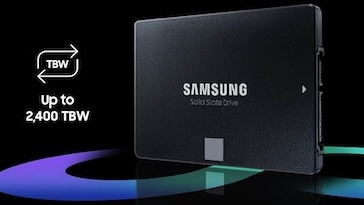
SAMSUNG 870 EVO 4TB SATA III SSD delivers 560/530 MB/s speed, high endurance, AES 256-bit encryption, and proven reliability for NAS and PC storage.